AUTOOL SDT101 · Automotive Smoke Leak Detector for External-Air Low-Pressure Testing
Run Controlled Low-Pressure Smoke Tests with Shop Air
Connect an existing shop-air supply, regulate output to 3.2 kPa / 0.46 psi, and trace smoke escaping from a correctly isolated low-pressure test section. The compact external-air design starts producing smoke in about five seconds and suits permitted EVAP and related checks when a built-in pump is unnecessary.
- External Shop-Air Input
- 3.2 kPa / 0.46 psi Output
- About 5-Second Smoke Start
- 1.6 kg Main Unit
- Operation Down To -20°C
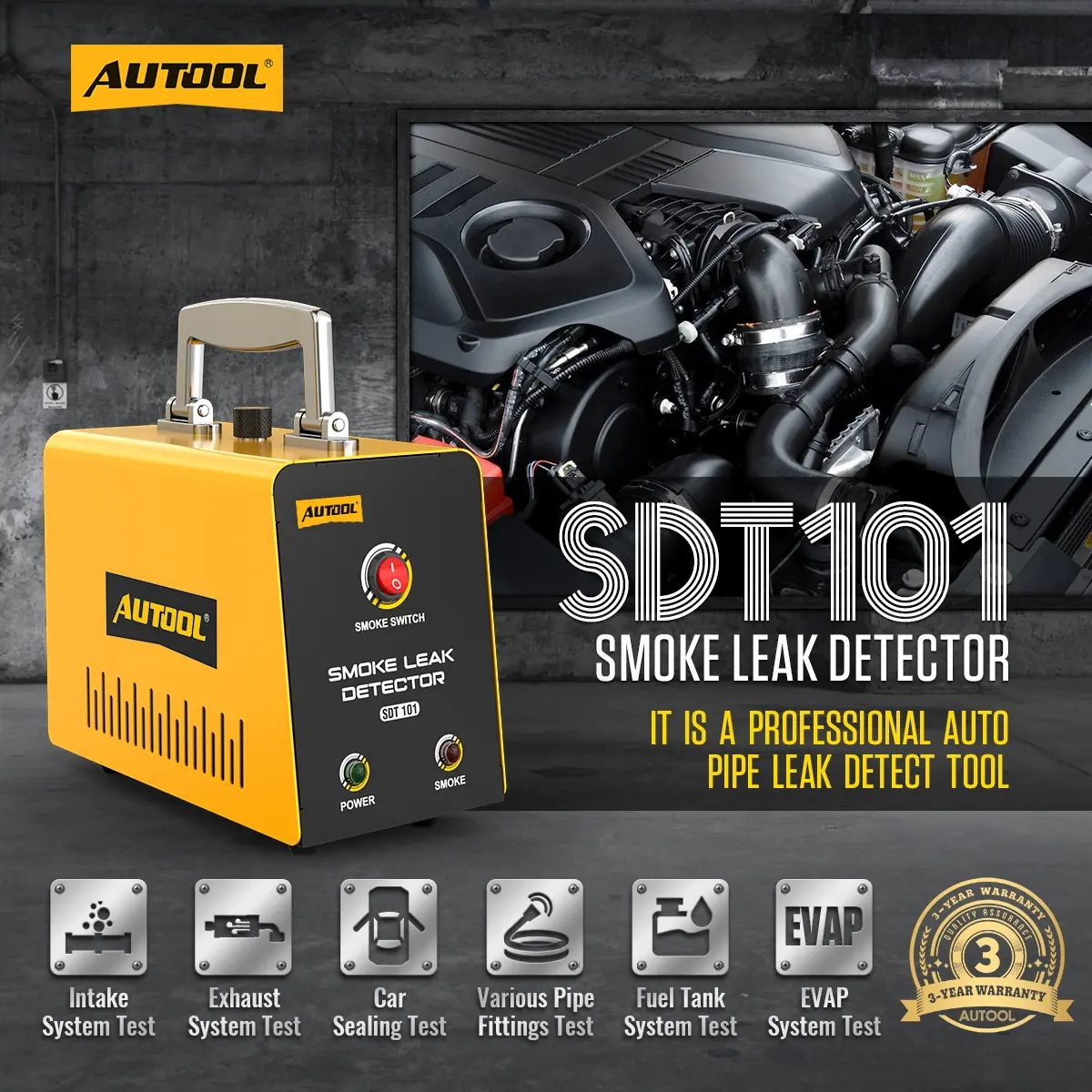
Key Features
Fixed 3.2 kPa Output with External Air Supply
Fixed Low-Pressure Control
The built-in controller regulates vehicle-side output to 3.2 kPa / 0.46 psi for EVAP-focused and other permitted low-pressure checks. The external compressor supplies air to the machine; its supply pressure is not applied directly to the test line.
External-Air Workshop Setup
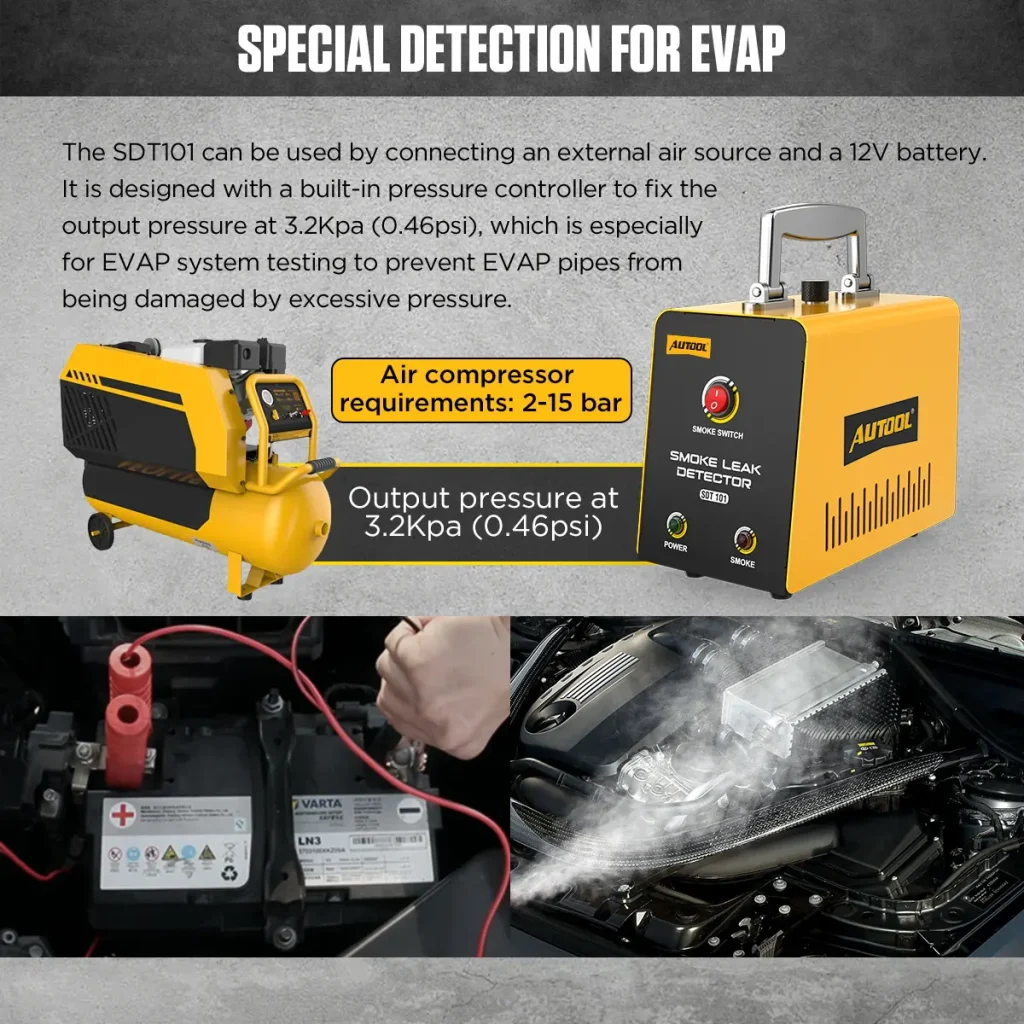
Connect SDT101 to an existing shop-air supply or external compressor; the unit regulates that supply to its fixed low-pressure output for EVAP testing. This configuration suits work areas that already have compressed air and do not need a built-in pump.
Visual Leak Tracing
Check whether a permitted low-pressure EVAP, fuel-tank, or vapor-line leak may explain the fault before replacing parts. After correct connection and isolation, escaping smoke can reveal a path for closer inspection.
About Five-Second Smoke Startup
Smoke begins in about five seconds once the prepared unit is connected and activated.
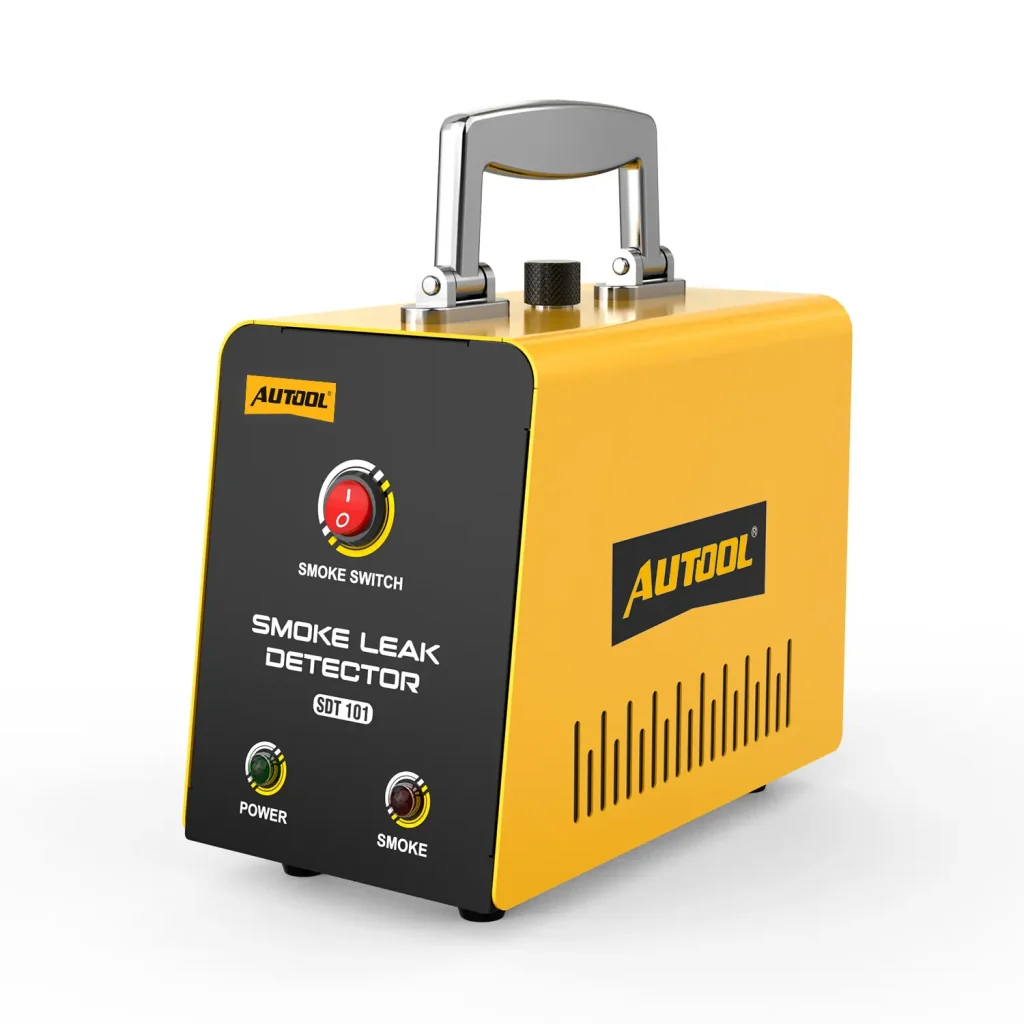
Compact Handled Body
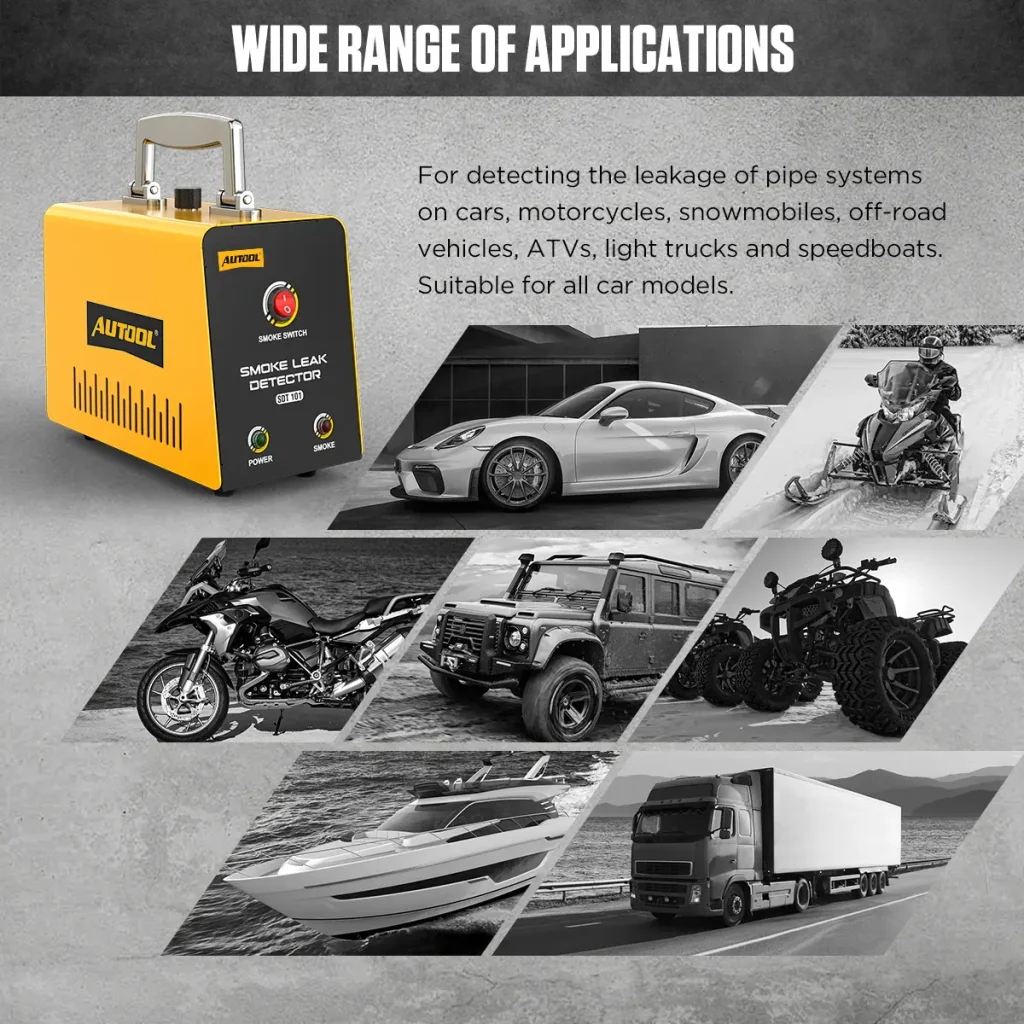
SDT101’s compact handled body and 1.6 kg main-unit weight make it easier to position, use, carry, and store around an equipped work area than larger smoke leak detectors.
Grouped Controls and Ports
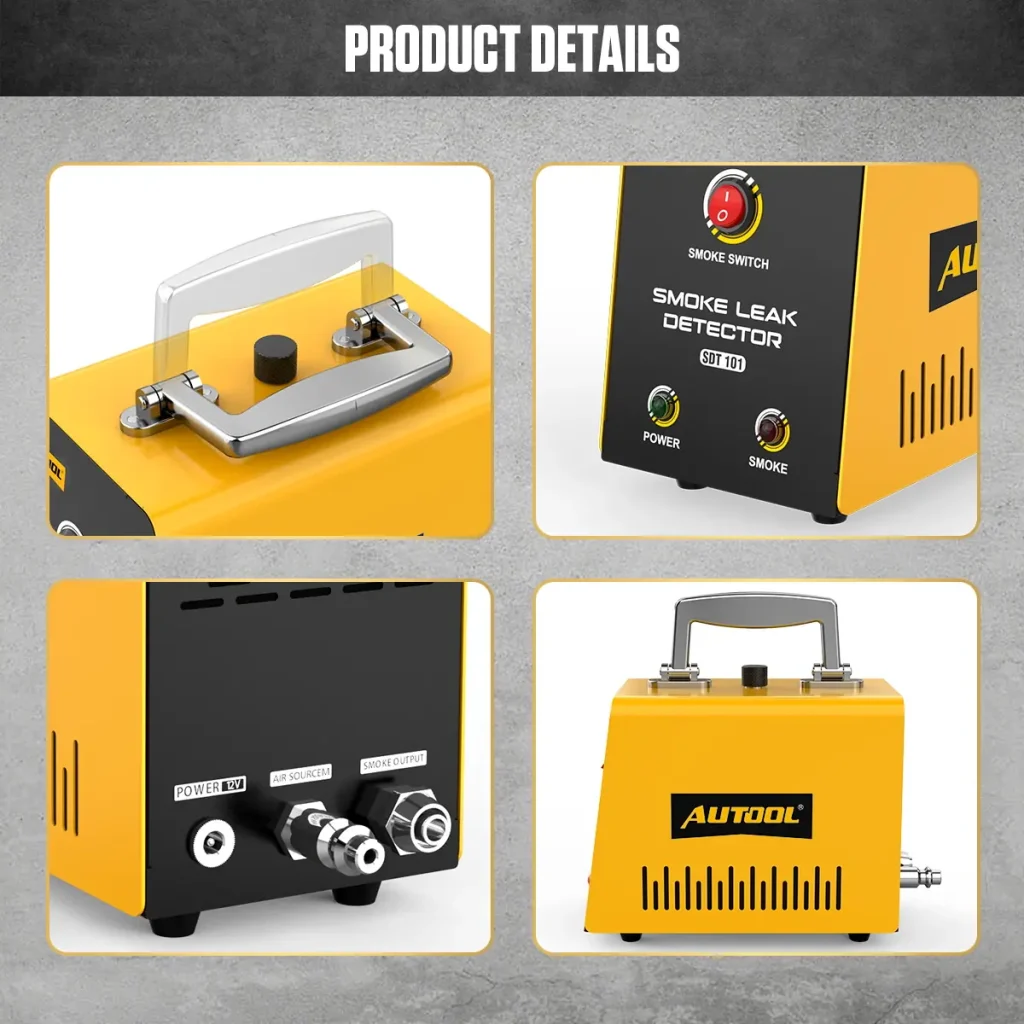
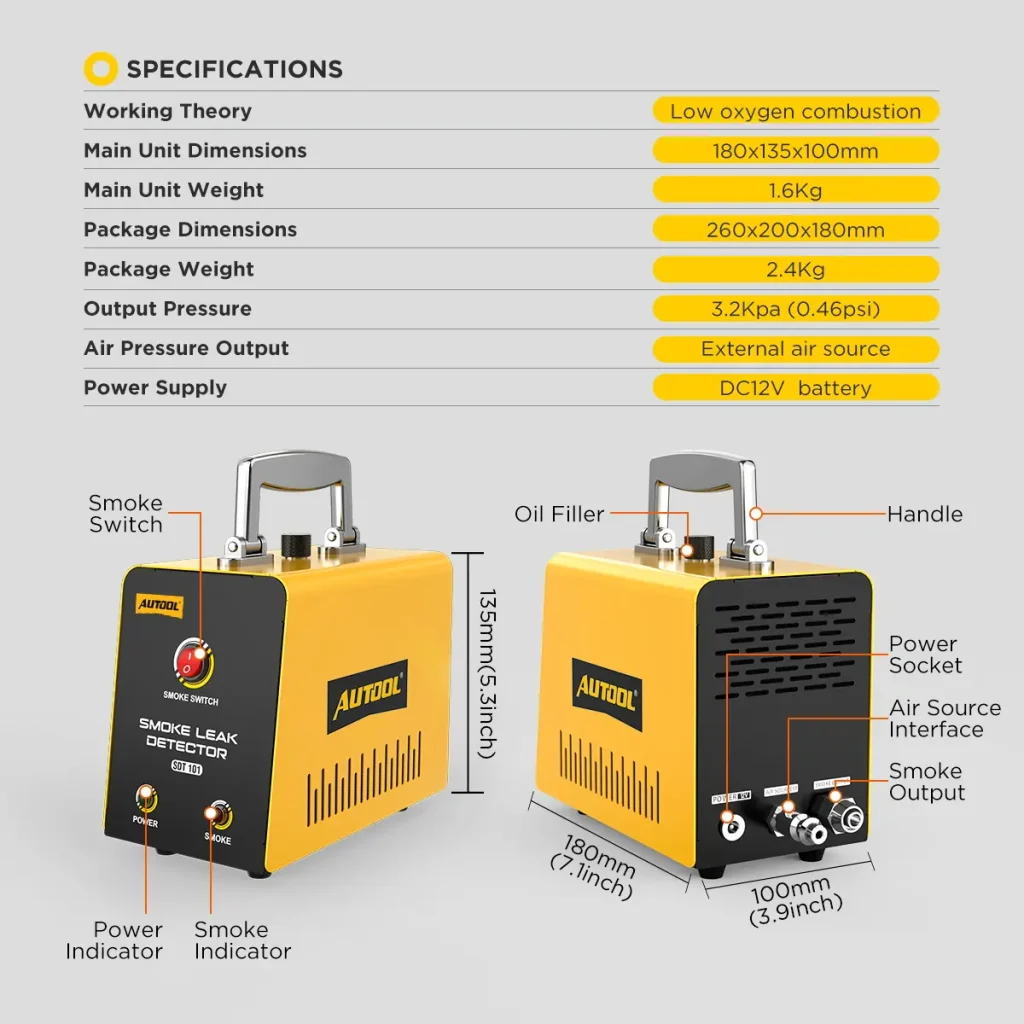
The handle, smoke switch, power indicator, air inlet, and smoke outlet are grouped on the compact body so the main controls and connections are easy to identify during setup.
Temperature Protection
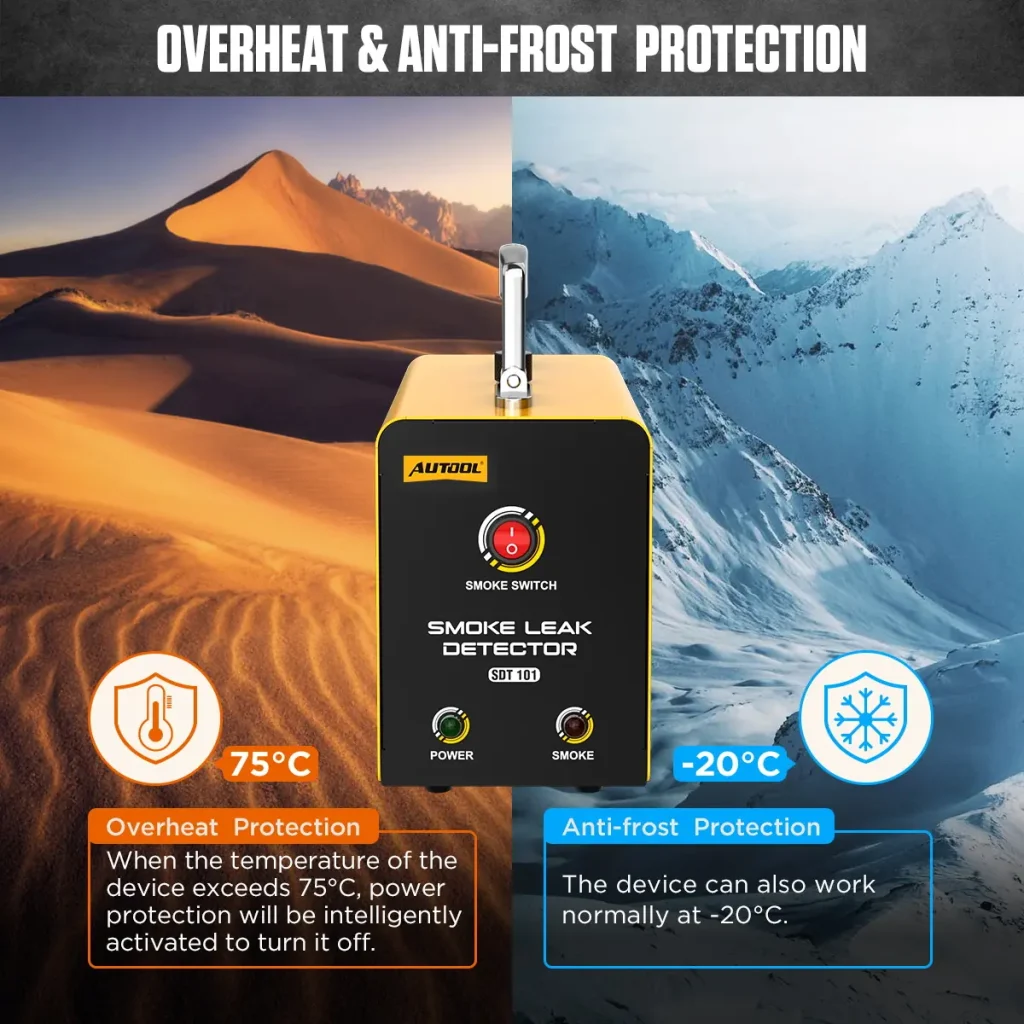
The unit supports operation down to -20°C, and automatic overheat protection shuts off power above 75°C. Allow the metal housing to cool before handling or restarting after protection activates.
Maintenance-Friendly Oil Routine
Use liquid paraffin or baby oil, fill 10–15 mL before first use, and add fresh oil only when smoke becomes thin. Drain residual oil before a refill and do not exceed 15 mL at one time.
Intake, Exhaust, Sealing and Line Fittings
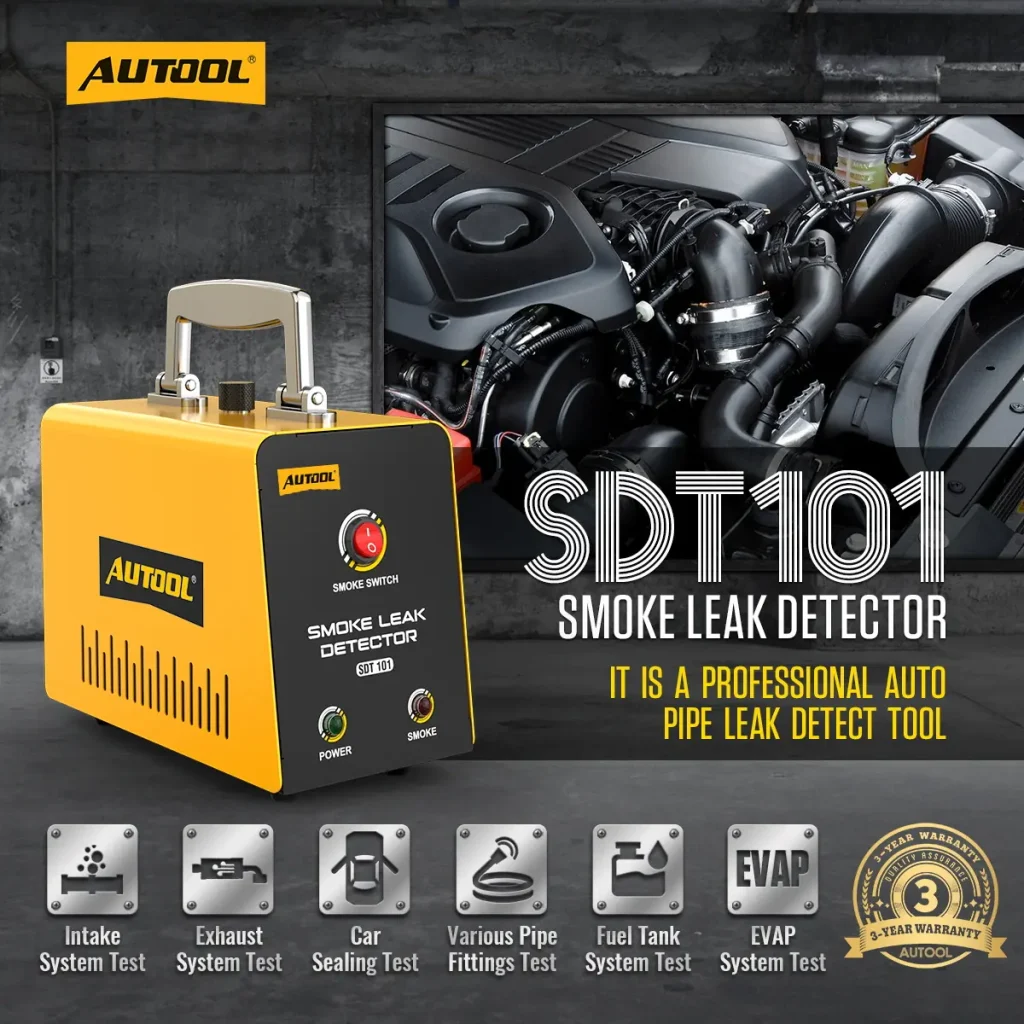
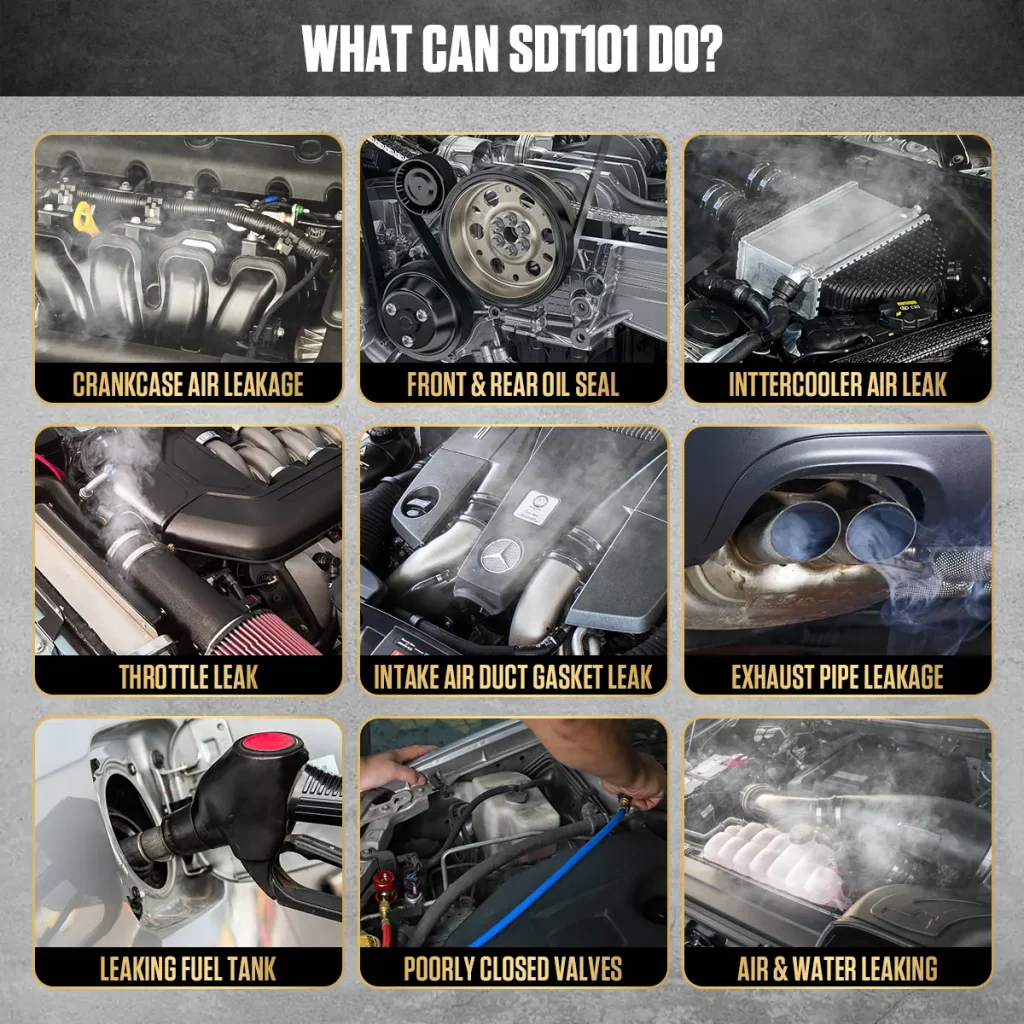
Supports intake system tests, exhaust system tests, throttle leaks, intake air duct gasket leaks, and exhaust leak checks. Can help locate crankcase leaks, front and rear oil seal leaks, intercooler air leaks, valves that do not close fully, and line-fitting leaks. Smoke can help visually identify certain air and water leakage paths where the applicable vehicle or component service procedure permits smoke testing.
3.2 kPa / 0.46 psi EVAP-Safe Pressure
SDT101’s built-in pressure controller fixes output at 3.2 kPa / 0.46 psi for EVAP system testing and other permitted low-pressure line leak checks, helping prevent excessive pressure from damaging EVAP lines.
Smoke Starts in About 5 Seconds
Once the unit is connected and ready, smoke starts in about 5 seconds for visual leak location.
3 Years Warranty Support
Main unit: 3-year warranty. Standard accessories: 1-year warranty. Warranty Policy.
Safety & Compatibility
Confirm Air Quality, System Limit, and Test Procedure
External Air Is Required
Connect SDT101 to suitable shop air; the machine regulates the supply to a 3.2 kPa / 0.46 psi test output.
Low-Pressure Test Scope
SDT101 provides a regulated low-pressure smoke output for approved systems, including EVAP applications.
Use the Specified Oil
Testing oil is not included. Use liquid paraffin or baby oil in the stated 10–15 mL quantity, and never refill while the unit is operating or hot.
Observe Heat and Duty Limits
Do not run continuously for more than eight minutes. If overheat protection stops the unit, switch off and allow it and its metal housing to cool before handling or restarting.
Confirm Power and Connections
Use a 12V DC battery connection with correct polarity. Check that the hose, access adapter and isolated system are secure before starting smoke generation.
Interpret Results with the Vehicle Procedure
Escaping smoke supports leak localization. A no-smoke result may require checking the access point, isolation, valve state, blockage, intermittent behavior or a non-leak cause.
Never Refill While Running
Do not refill testing oil while SDT101 is running.
Separate Supply and Test Pressure
Do not use compressor supply pressure as the test-line pressure value.
Cool Before Restarting
Let the unit cool before restarting after overheat protection is triggered.
Test Results
Read Smoke Only After the System Is Prepared
Smoke Escapes at a Joint or Seal
Inspect the exact area, confirm that the smoke is not leaving through an intentionally open path, repair the verified leak and repeat the same test.
Smoke Leaves a Normal Vent or Open Path
Review the service procedure and valve state before calling it a fault. EVAP testing often depends on controlling normal purge or vent paths.
No Smoke Is Visible
Recheck the connection, system isolation and smoke delivery. If setup is correct, continue with the applicable functional diagnosis because blockage, an intermittent fault or a non-leak failure may not create a visible plume.
Specifications
SDT101 Specifications
| Smoke Output & Protection | |
|---|---|
| Working Principle | Low Oxygen Combustion |
| Test Oil Filling Volume | 10-15ml |
| Rated Output Pressure | 3.2Kpa(0.46psi) |
| Rated Output Flow | >10L/min |
| High-Temperature Protection | Stops working above 75°C |
| Response Time | Produces smoke in 5 seconds |
| Power & Physical Size | |
| Input Power | DC12V/5A |
| Rated Power | 48W |
| Net Weight (Main Unit) | 1.6kg |
| Main Unit Dimensions | 180mm*100mm*135mm |
| Monitoring & Controls | |
| Air Source Type | External Air Source |
| Mode Output | Smoke Mode |
Manual & Downloads
Use the Manual for Setup and Test Pressure
AUTOOL SDT101 User Manual
Open the PDF manual for SDT101 shop-air connection, regulated low-pressure smoke tests, system isolation, test-oil handling, safety, maintenance, and troubleshooting.
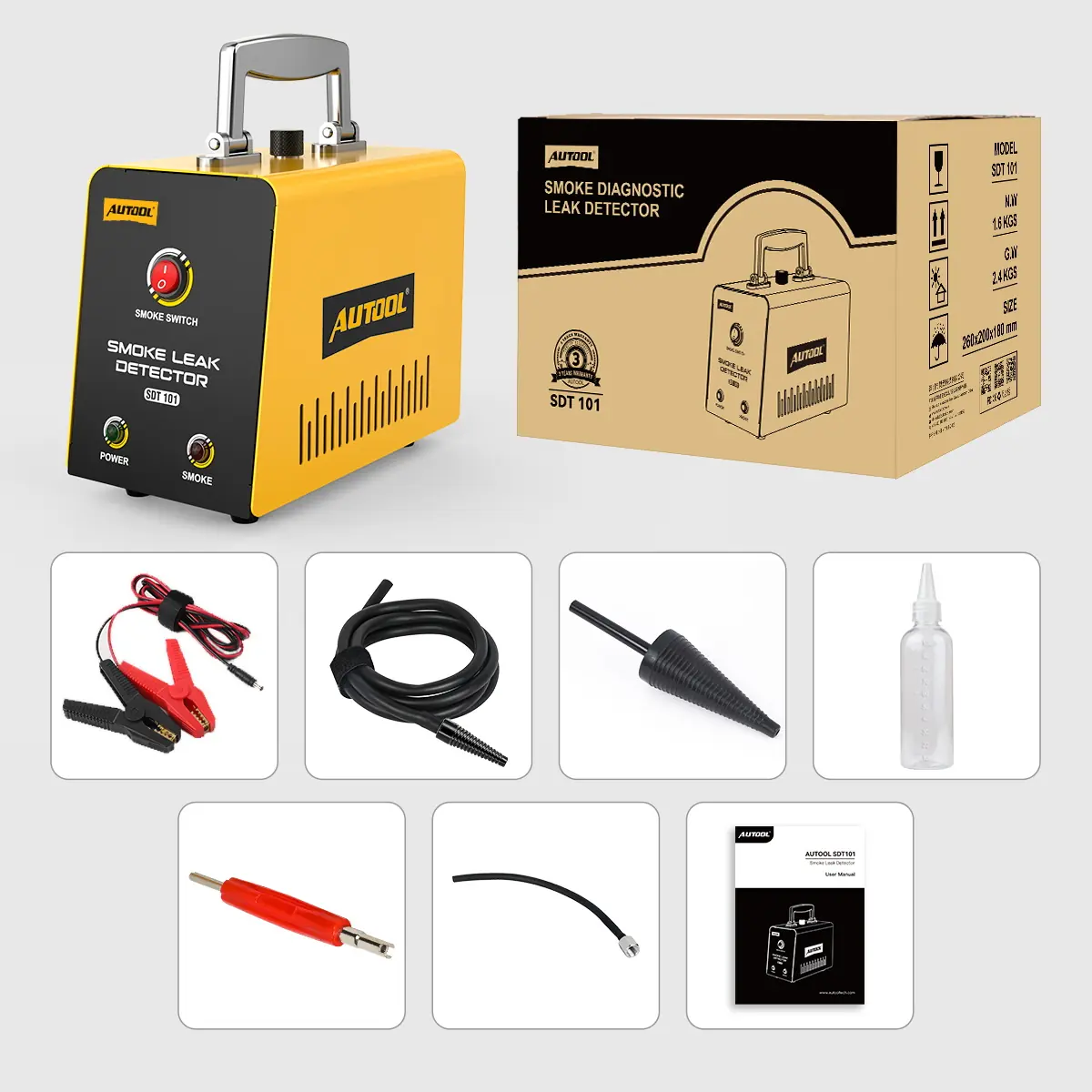
Package
What’s Included
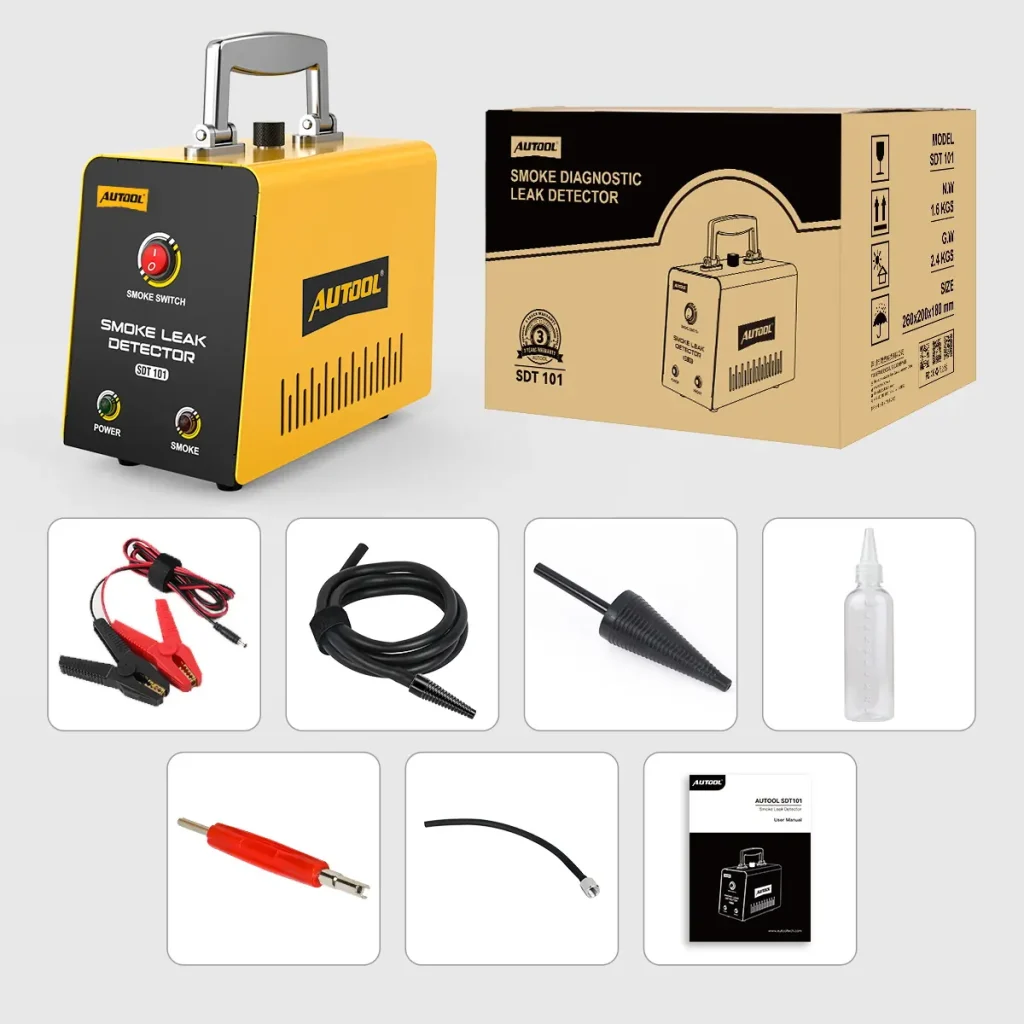
- Main Unit1× AUTOOL SDT101 smoke leak detector.
- EVAP Connector1× EVAP special connector.
- Standard Adapter1× standard cone adapter.
- Power Cable1× power cord clamp for a 12V DC battery connection.
- Valve Tool1× valve-core wrench.
- Refill Bottle1× empty testing-oil refill bottle; testing oil is not included.
- Smoke Hose1× smoke hose.
- Documentation and Box1× user manual and SDT101 retail box.
FAQs
Shop Air, Pressure, and Adapter Questions
Does SDT101 Have a Built-In Air Pump?
No. SDT101 does not have a built-in air pump. It must be connected to an external air source or shop air supply before testing.
- No. It requires an external air source or shop-air supply. Its internal controller regulates the vehicle-side output to 3.2 kPa / 0.46 psi.
Why Is SDT101 Well Suited to EVAP Leak Testing?
SDT101 regulates its output to a fixed 3.2 kPa / 0.46 psi. This low pressure is designed for EVAP system testing and helps avoid excessive pressure on EVAP lines.
- Its defining feature is a fixed 0.46 psi low-pressure output. Confirm that this pressure and the connection procedure are appropriate for the vehicle being tested.
What power and smoke fluid does it need?
Use a 12V DC battery connection and 10–15 mL of liquid paraffin or baby oil. Testing oil is not included.
Can it test high-pressure or boosted systems?
SDT101 is a low-pressure smoke tester and should not be presented as a high-pressure or boost-leak machine. Select a model and procedure designed for the required pressure.
How Long Can SDT101 Run Continuously?
Do not operate the detector continuously for more than 8 minutes. Let it rest between uses.
- Limit continuous operation to eight minutes. Let the unit cool before another cycle, especially if thermal protection has activated.
Does visible smoke prove which component failed?
It identifies an escape path for inspection. Confirm the leaking joint, hose, seal or component and complete the vehicle’s diagnostic procedure before replacing parts.
What if no smoke appears outside the system?
Use visible smoke to locate the leak area, then repair and retest. If no smoke appears, recheck isolation, flow, and the test setup before continuing.
What Accessories Are Included?
The package includes the SDT101 main unit, EVAP connector, standard cone adapter, power cable, valve-core wrench, empty oil refill bottle, smoke hose, user manual, and retail box. Testing oil and an external air source are not included.
What Power Supply Does SDT101 Need?
SDT101 requires a 12V DC battery connection. Connect the power cord clamp to a 12V DC vehicle battery before switching on the detector.
What Testing Oil Should I Use?
Use liquid paraffin or baby oil as testing oil. Testing oil is not included, so have the selected oil ready before use.
How Much Testing Oil Should I Add?
Add 10–15 mL testing oil before first use. Do not exceed this range. Fresh oil should be added only when the smoke becomes thin, and no more than 15 mL should be added each time. Before adding fresh oil, pour out the remaining oil in the detector.
Can SDT101 Detect Very Small Line Leaks?
SDT101 helps locate small low-pressure line leaks by filling the test area with smoke and showing where it escapes. Confirm the leak using the service procedure for the system being tested.
What Systems Can SDT101 Test?
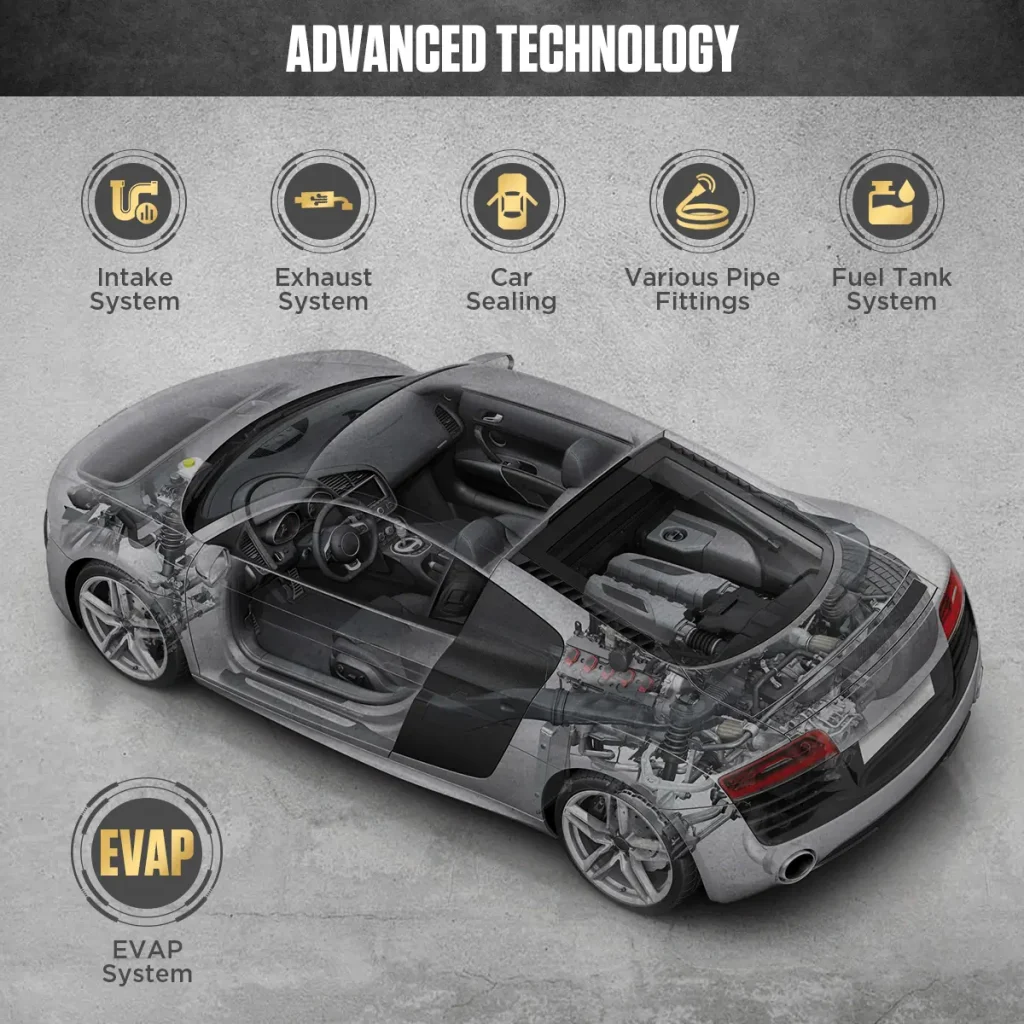
SDT101 supports low-pressure smoke checks for EVAP, intake, exhaust, vehicle sealing areas, line fittings, and fuel tank systems. It can also check crankcase leaks, front and rear oil seals, intercooler air leaks, throttle leaks, and intake air duct gasket leaks. Smoke can also help trace valves that do not close fully and certain air or water leak paths.
Can SDT101 Be Used for High-Pressure Systems?
No. SDT101 is a low-pressure EVAP smoke leak detector with 3.2 kPa / 0.46 psi output pressure. Do not use it as a high-pressure leak tester.
What Should I Do If Overheat Protection Is Triggered?
The detector automatically shuts off power if the internal temperature exceeds 75°C. Stop operation and allow the unit to cool before restarting. Avoid touching the round metal housing because it may be hot.
How Does SDT101 Differ from SDT100?
SDT101 is an EVAP-focused model that requires an external air source and outputs 3.2 kPa / 0.46 psi low pressure. SDT100 instead uses a built-in air pump for users who do not want to connect shop air.
How Do AUTOOL Smoke Leak Detector Models Differ?
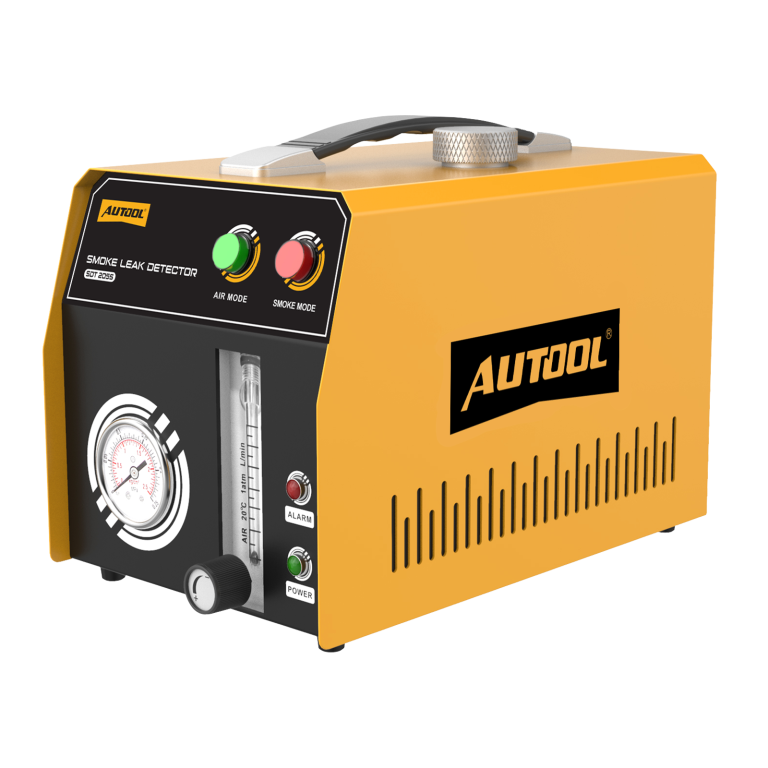
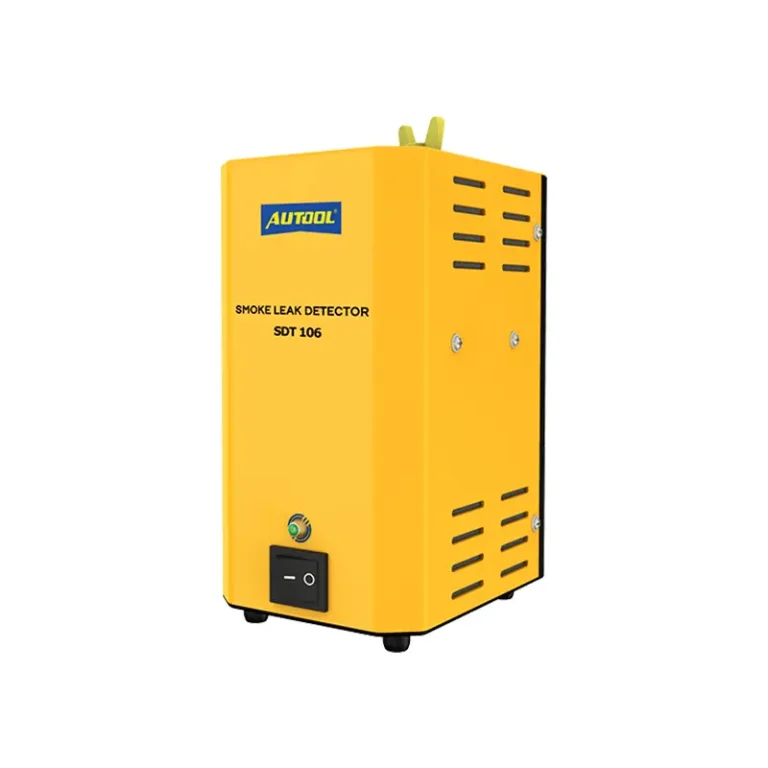
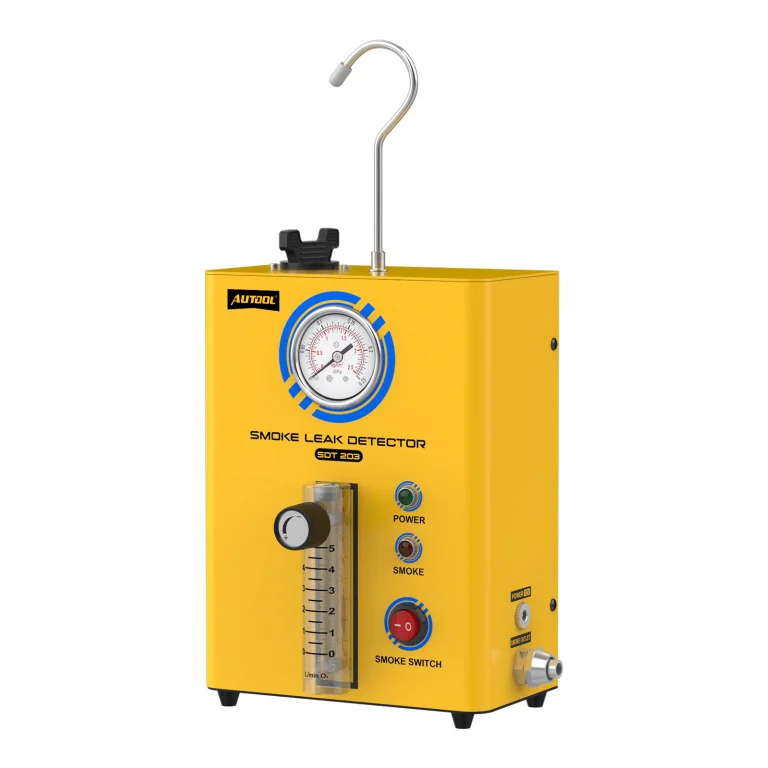
SDT101 and SDT103 are EVAP-focused external-air-source models rated at 3.2 kPa. SDT50, SDT60, SDT100, and SDT106 are built-in pump options. SDT203, SDT205, and SDT205S add combinations of pressure gauges, flow indication, Air Mode / Smoke Mode, and flow control depending on model. SDT206 and SDT208 are models with additional control features, with SDT208 providing Standard Mode at 35 psi and EVAP Mode at 10 psi.
How Long Is the Warranty?
Main unit: 3-year warranty. Standard accessories: 1-year warranty. Warranty Policy.