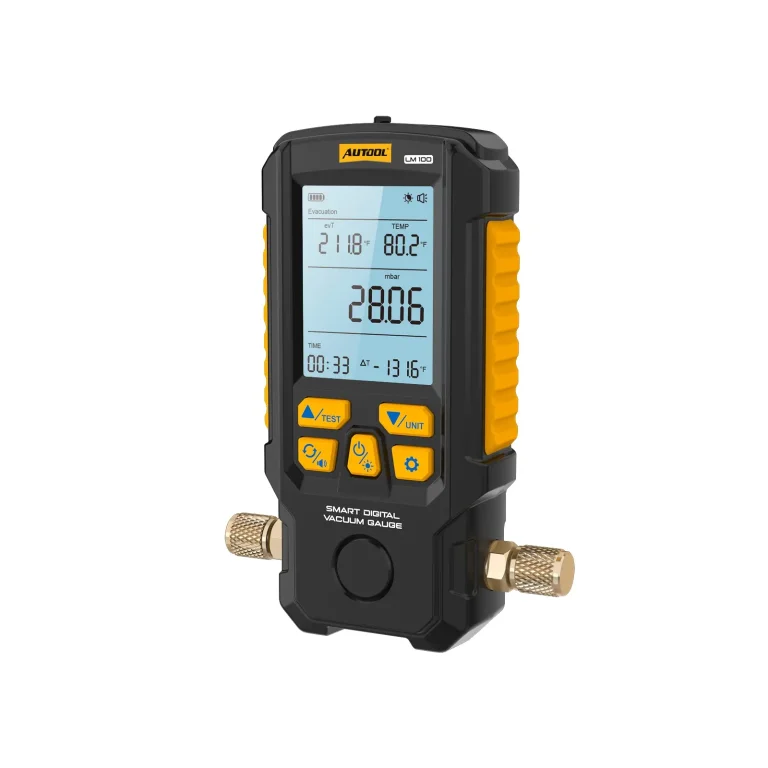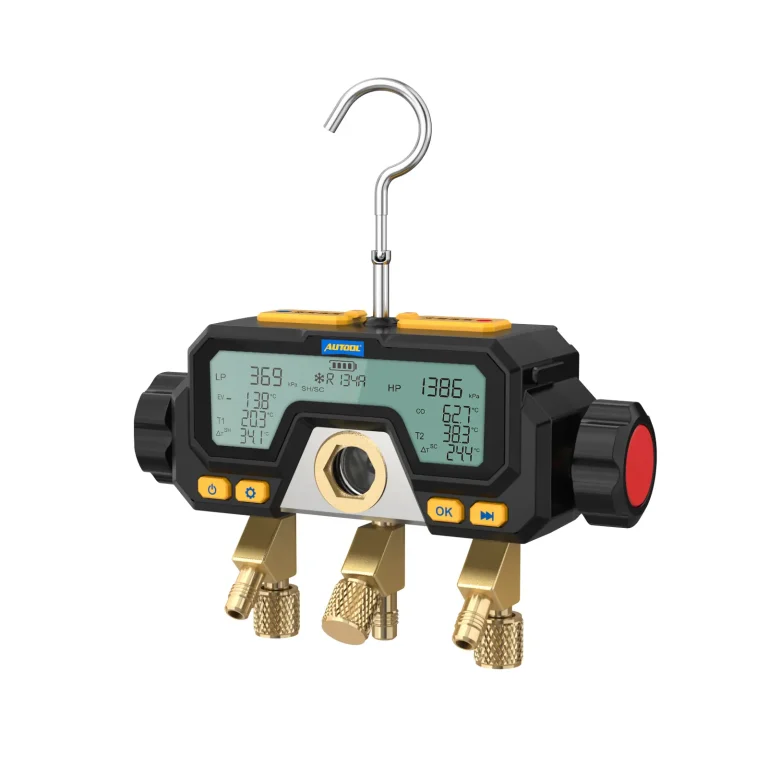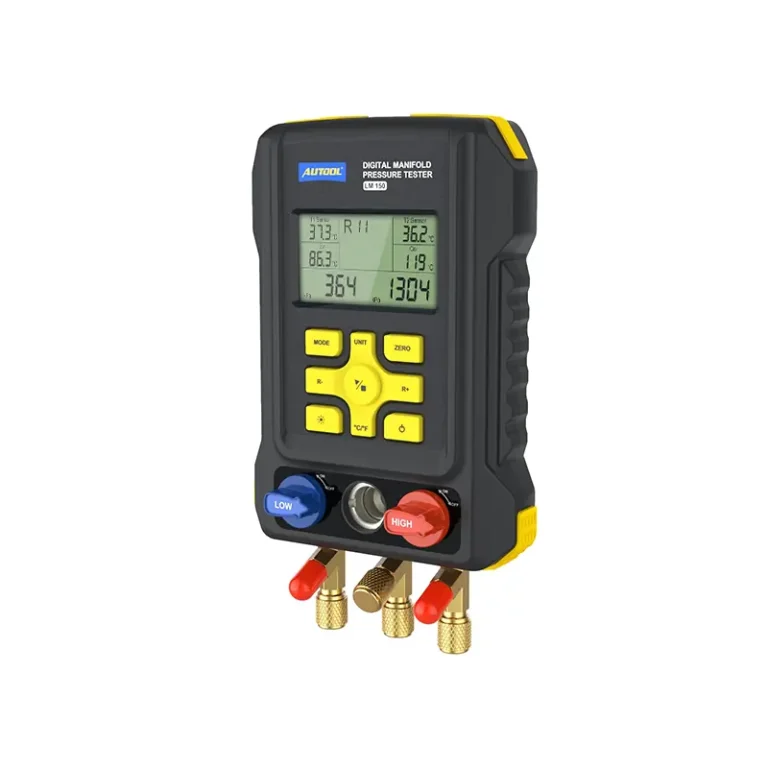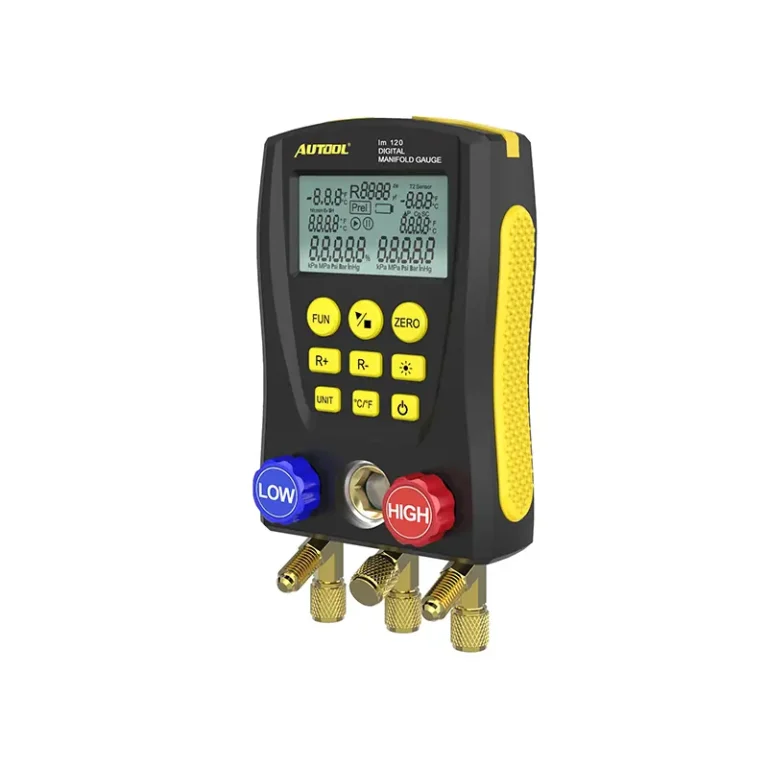
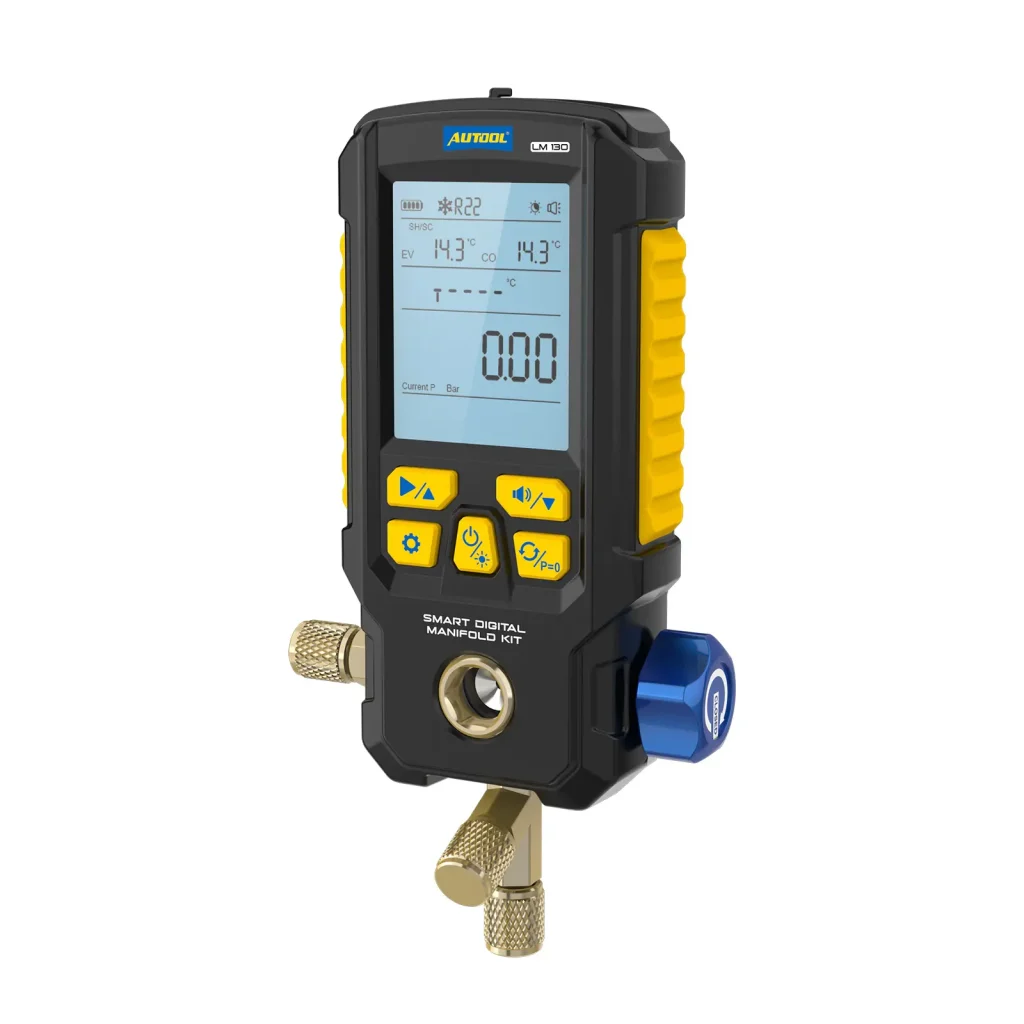
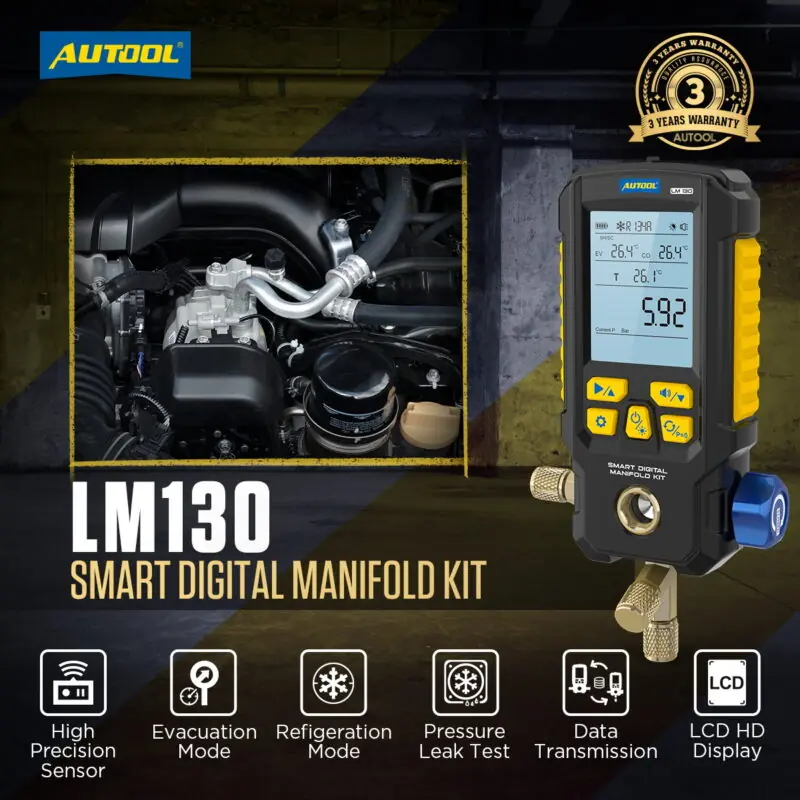
AUTOOL LM130 · Smart AC Manifold Gauge with Vacuum and Data Transfer
Combine Refrigerant Readings with Vacuum Checks
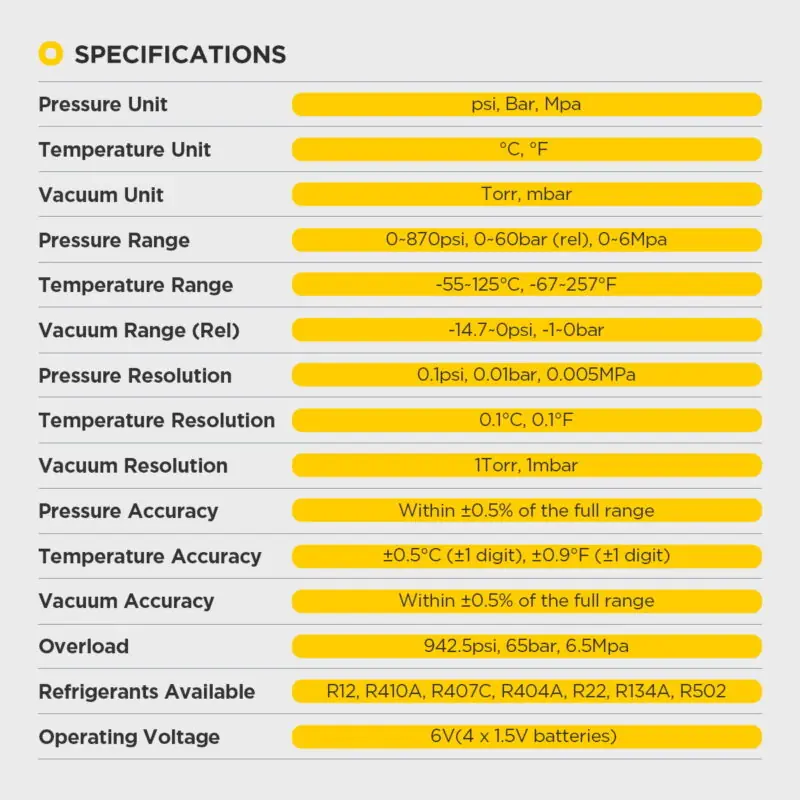
Measure gauge pressure from 0–6 MPa, monitor relative vacuum from -101–0 kPa, and assess pressure retention with ±0.5% full-scale pressure accuracy. Seven profiles cover known R134a, R12, R410A, R407A, R404A, R22 and R502 refrigerants for live pressure and temperature readings. A sight window, 2.8-inch backlit display and connection to a separate LM100 support service monitoring.
- 0–6 MPa Gauge Pressure
- 7 Refrigerant Profiles
- ±0.5% FS Pressure Accuracy
- Vacuum & Retention Monitoring
- LM100 Data Connection
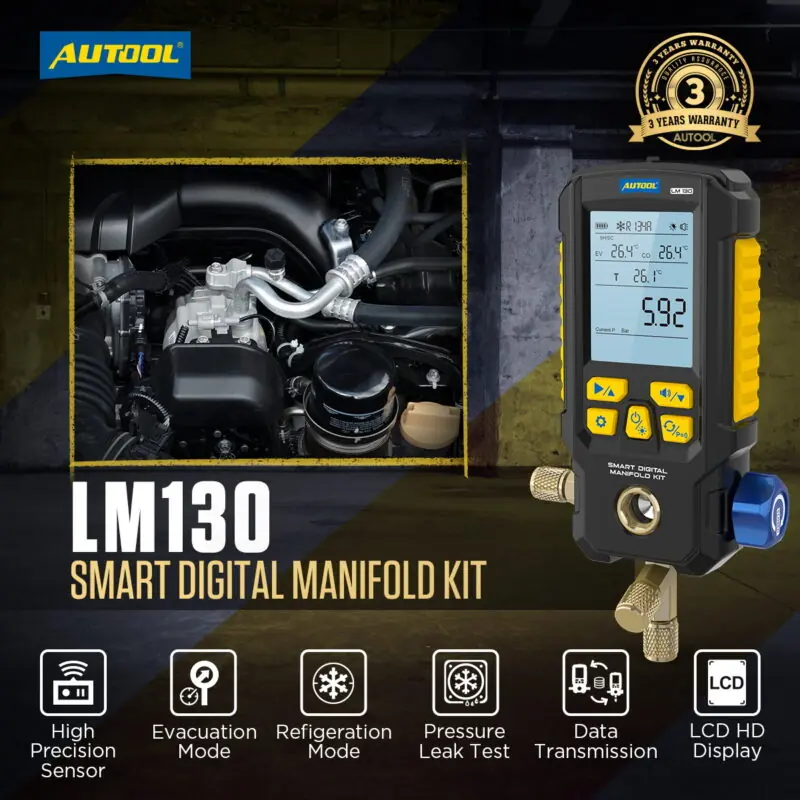
Key Features
Pressure, Temperature, Vacuum, and Data Functions
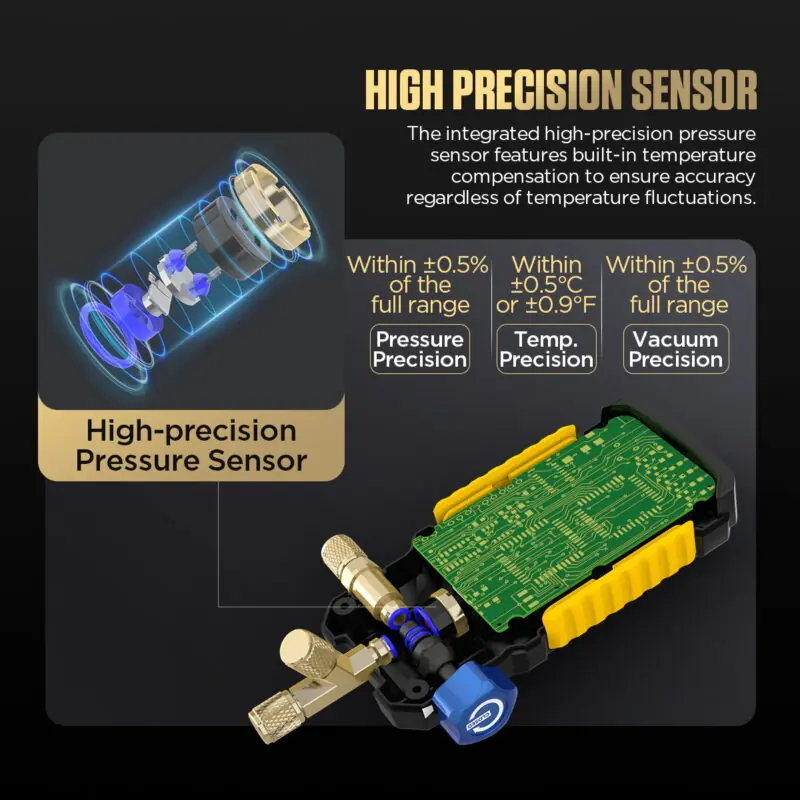
Temperature-Compensated Pressure Sensor
The built-in sensor and temperature compensation system support accurate pressure measurement during A/C service. Pressure measurement accuracy is ±0.5% of full scale within the rated range.
Seven Refrigerant Profiles
Select R134a, R12, R410A, R407A, R404A, R22 or R502 after independently confirming the system refrigerant.
Live Refrigeration Readings
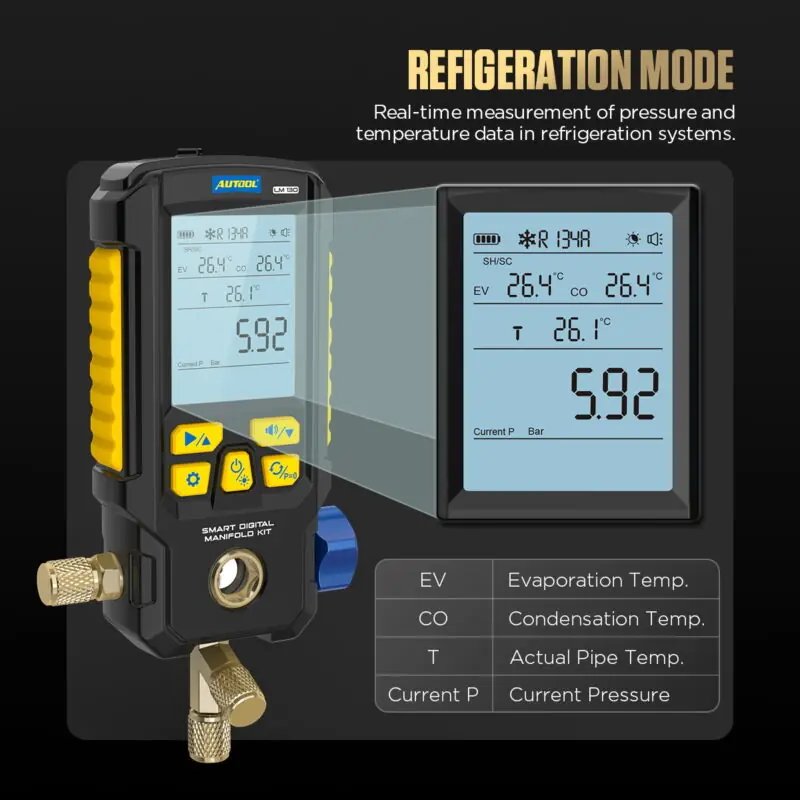
Read pressure and temperature data in real time for the selected refrigerant.
Vacuum Monitoring
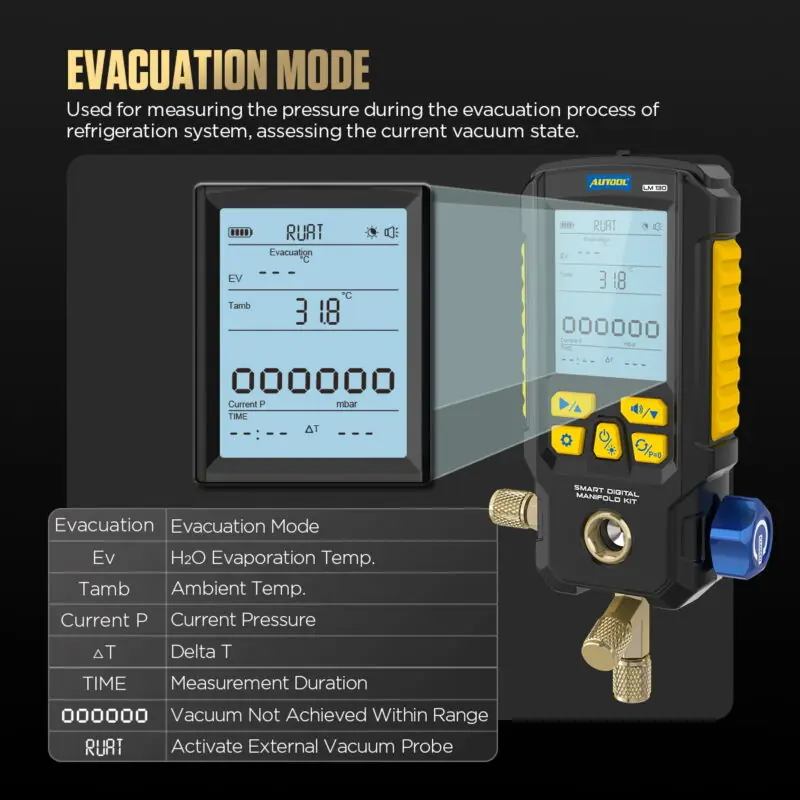
Track relative-vacuum changes while the refrigeration system is evacuated. The external vacuum-probe connection supports vacuum monitoring during the service procedure.
Pressure-Retention Check
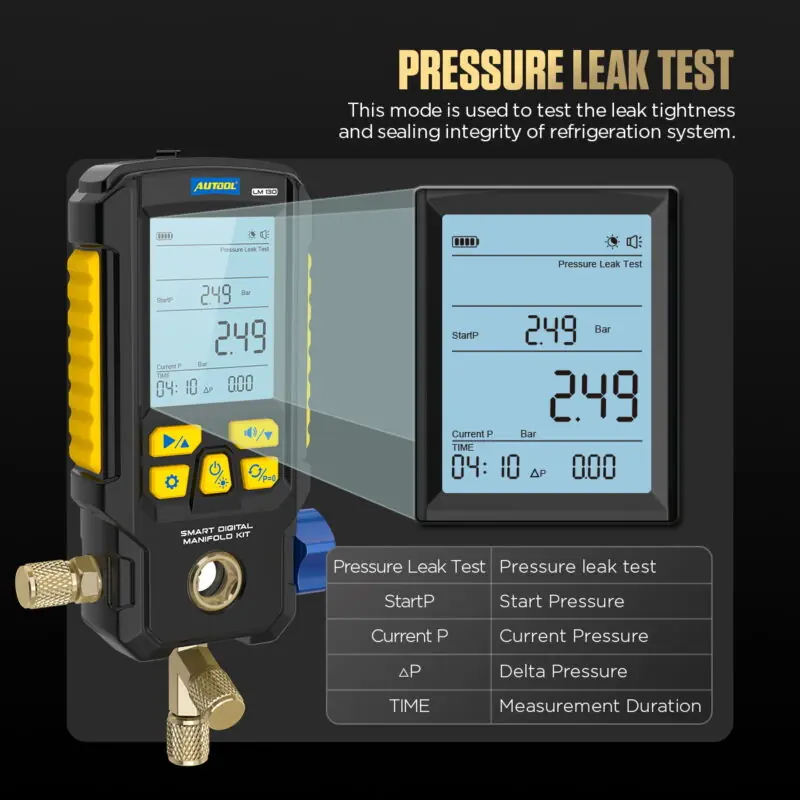
Monitor pressure changes during retention testing to assess whether system tightness needs further investigation.
Visible Filling Window
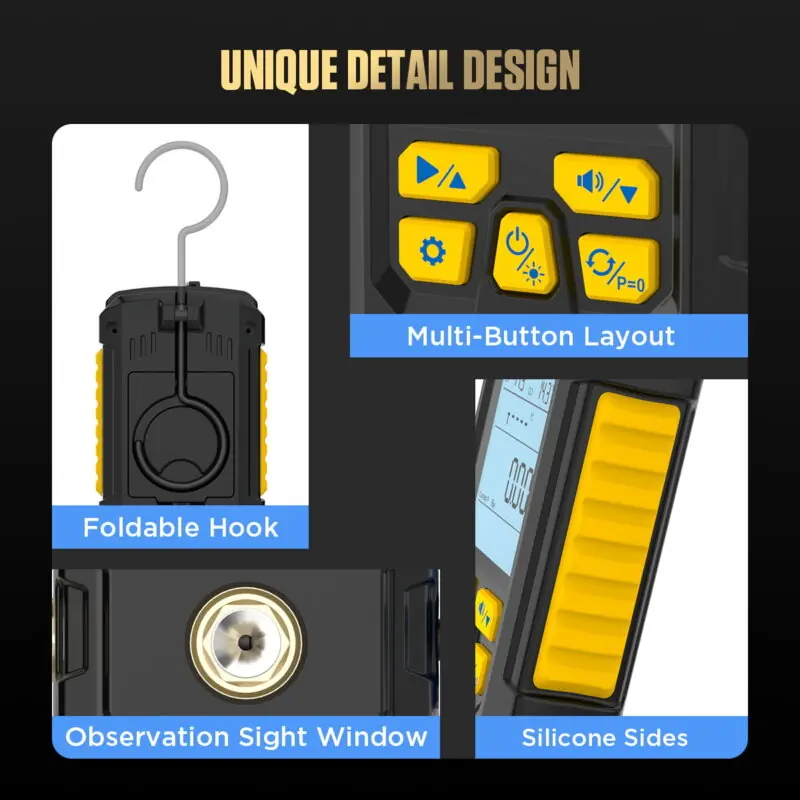
Observe refrigerant flow through the filling window during the system-specific charging procedure. The multilayer nylon hose provides a flexible, leak-resistant service connection within its rated working pressure.
LM100 Communication
The integrated microprocessor and communication interface connect with the separate LM100 for synchronized measurement data.
Selectable Units
Switch between psi, bar and MPa for pressure, micron, Torr and mbar for vacuum, and Celsius or Fahrenheit for temperature.
Backlit Fast-Response Display
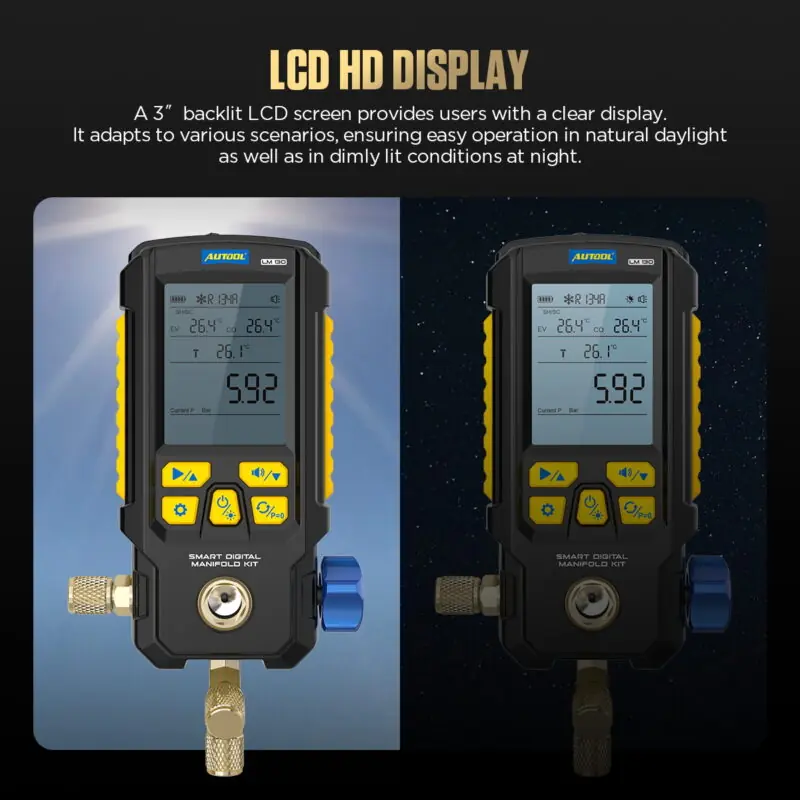
Read measurements on the 2.8-inch backlit display, with an approximately 0.5-second response for monitoring in bright or dim work areas.
Service-Ready Construction
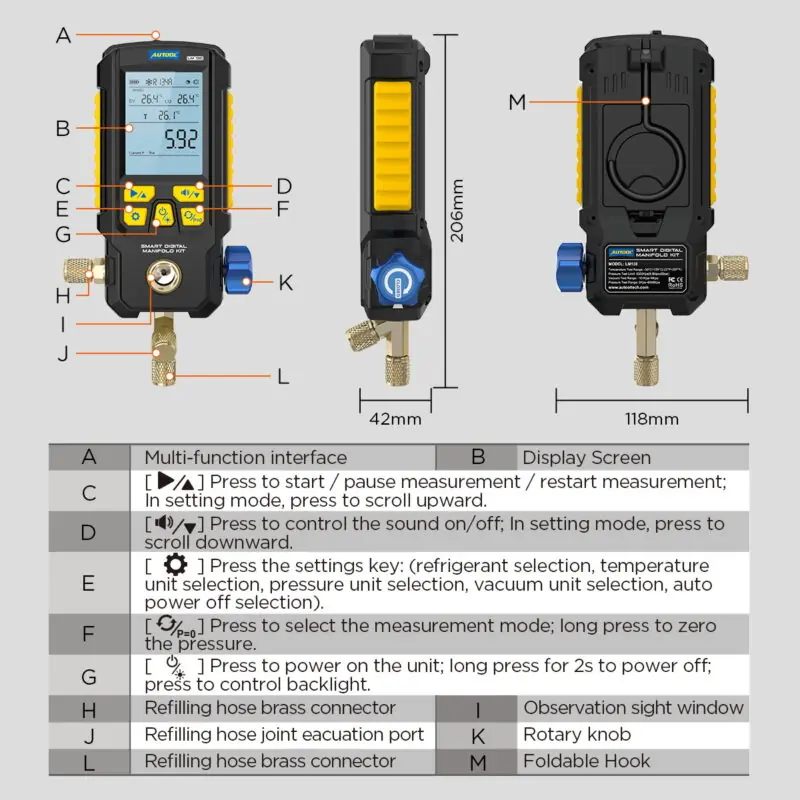
Use the foldable hook, silicone side grip, and dedicated controls for handheld or suspended operation. Monitor refrigerant filling through the sight window. A multilayer hose and brass connection hardware support the service connections.
Automatic Power-Off
The gauge turns off after 20 minutes of inactivity to reduce energy use, and supports switchable pressure, vacuum, and temperature units.
3 Years Warranty Support
Main unit: 3-year warranty. Standard accessories: 1-year warranty. Warranty Policy.
Safety & Compatibility
Use the Correct Refrigerant, Ports, and Rated Range
Stay Within Gauge Range
Measurement is listed from -101 kPa to 6 MPa; the 10 MPa absolute limit is not a working target.
Respect Hose Working Pressure
Standard hose working pressure is 600 PSI; the 3000 PSI figure is a limit, not normal use.
Know The Refrigerant First
The selected-refrigerant mode does not identify unknown or mixed gas.
Use PPE And Ventilation
Protect eyes/hands as required and work in a ventilated area away from heat, moisture, ignition hazards and strong electromagnetic fields.
Do Not Modify The Instrument
Use suitable rated replacement hoses when required and do not alter internal circuitry.
Standard Hose Working Pressure
The standard hose maximum working pressure is 600 PSI, approximately 4.13 MPa / 41.3 bar.
Standard Hose Pressure Limit
The standard hose pressure limit is 3000 PSI, approximately 20.68 MPa / 206.8 bar.
Confirm Equipment Pressure Rating
Before testing, confirm the rated pressure of the equipment to be tested.
Match Hose Pressure Rating
If the charging hose does not meet the pressure requirements, use a suitable replacement hose for testing.
Restricted Operating Environments
Do not use or store this instrument in environments with high temperature, high humidity, flammable or explosive conditions, or strong electromagnetic fields.
Wear Protective Equipment
Wear appropriate protective equipment during testing to ensure user safety.
Ensure Adequate Ventilation
Use the instrument in a well-ventilated environment to avoid inhaling toxic gases.
Test Results
Review Pressure, Temperature, Vacuum, and Hold Data
Pressure And Temperature
Compare pressure and temperature with the known refrigerant, system load and equipment procedure to select the next check.
Vacuum Trend
Judge evacuation against the service target and hold period specified for the system.
Retention Change
First verify hose and connection stability, then use an approved method to locate any system leak.
Sight-Window Observation
The window helps confirm visible flow condition; it does not verify refrigerant identity or correct charge quantity by itself.
Specifications
LM130 Specifications
| Selection Criteria | |
|---|---|
| Primary fit | Seven-refrigerant manifold with sight window and LM100 link |
| Unknown refrigerant identification | No |
Manual & Downloads
Use the Manual for Setup and Service
AUTOOL LM130 User Manual
Open the PDF manual for LM130 refrigerant profiles, pressure and temperature readings, evacuation checks, LM100 communication, safe filling setup, and troubleshooting.
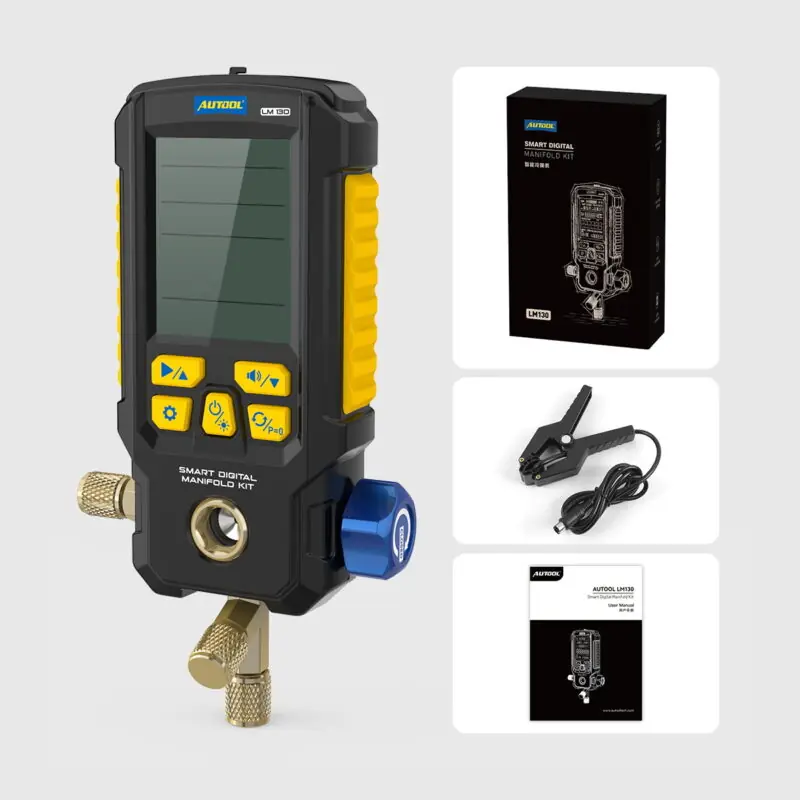
Package
What’s Included
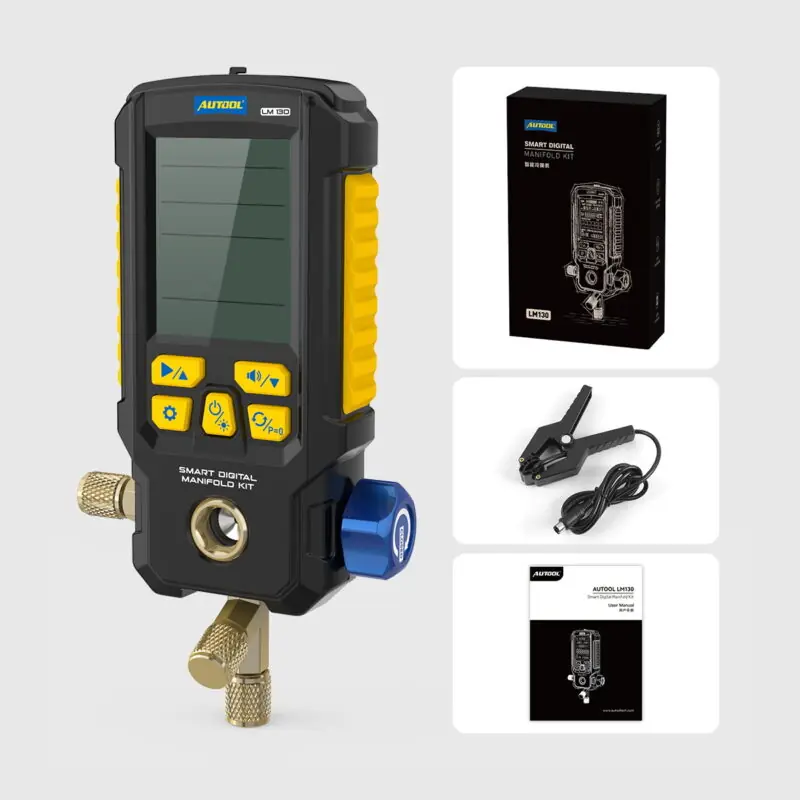
- LM130 Main UnitSmart digital manifold kit main instrument.
- Service Hose And ConnectionsConfirm the exact hose, fittings, and rating for the selected package.
- User ManualPrinted documentation plus model PDF.
- Selected-Package AccessoriesAsk for the current package list for the selected option before ordering.
FAQs
Data, Refrigerant, and Sensor Questions
Which refrigerants are listed?
R134a, R12, R410A, R407A, R404A, R22 and R502.
Does LM130 identify refrigerant?
No. Select only a refrigerant already confirmed from the equipment label or service information.
Can LM130 Connect To LM100?
Yes. LM130’s integrated microprocessor and communication interface connect with the separate LM100 for synchronized measurement data.
What Is The Visible Filling Window Used For?
The visible refrigerant filling window allows users to visually monitor refrigerant filling status in real time and quickly check whether the filling process is flowing normally.
- It lets you observe refrigerant flow during the service procedure; it does not prove identity or exact charge quantity.
Can the retention mode locate a leak?
No. It can show pressure change; locating the cause requires connection checks and a separate approved test.
Which pressure limit applies?
Use the lowest working rating among the system, instrument and hose, not the higher instrument/hose limit figures.
What units are available?
psi, bar and MPa for pressure; micron, Torr and mbar for vacuum; °C and °F for temperature.
Does it power off automatically?
Yes, after 20 minutes of inactivity according to the product body.
What Refrigerants Does LM130 Support?
LM130 includes seven built-in refrigerant options: R134A, R12, R410A, R407A, R404A, R22, and R502.
What Is The LM130 Pressure Measurement Range?
The device measures gauge pressure from -101 kPa to 6 MPa (-0.1 bar to 60 bar), with an absolute limit of 10 MPa / 100 bar. Always confirm the rated pressure of the equipment being tested before use.
What Is The Standard Hose Pressure Rating?
The standard hose maximum working pressure is 600 PSI, approximately 4.13 MPa / 41.3 bar. The hose pressure limit is 3000 PSI, approximately 20.68 MPa / 206.8 bar.
What Test Modes Does LM130 Include?
LM130 includes Vacuum Mode, Pressure Retention Test Mode, and Refrigerant Detection Mode. These modes support vacuum monitoring, leak inspection, and real-time refrigeration system pressure / temperature measurement.
What Units Can LM130 Switch Between?
LM130 supports pressure units psi, bar, and MPa; vacuum units micron, Torr, and mbar; and temperature units °C and °F.
Does LM130 Have Auto Sleep?
Yes. LM130 automatically powers off after 20 minutes of inactivity to reduce energy consumption and extend working time.
What Safety Notes Should I Follow?
Do not use the instrument beyond its rated pressure range. Do not use or store it in high-temperature, high-humidity, flammable, explosive, or strong electromagnetic environments. Do not modify the internal circuitry. Wear appropriate protective equipment and use the instrument in a well-ventilated environment to avoid inhaling toxic gases.