AUTOOL SDT206 · Dual-Pump Automotive Smoke Leak Detector with Flow Control
Monitor Pressure and Control Flow with Separate Built-In Pumps
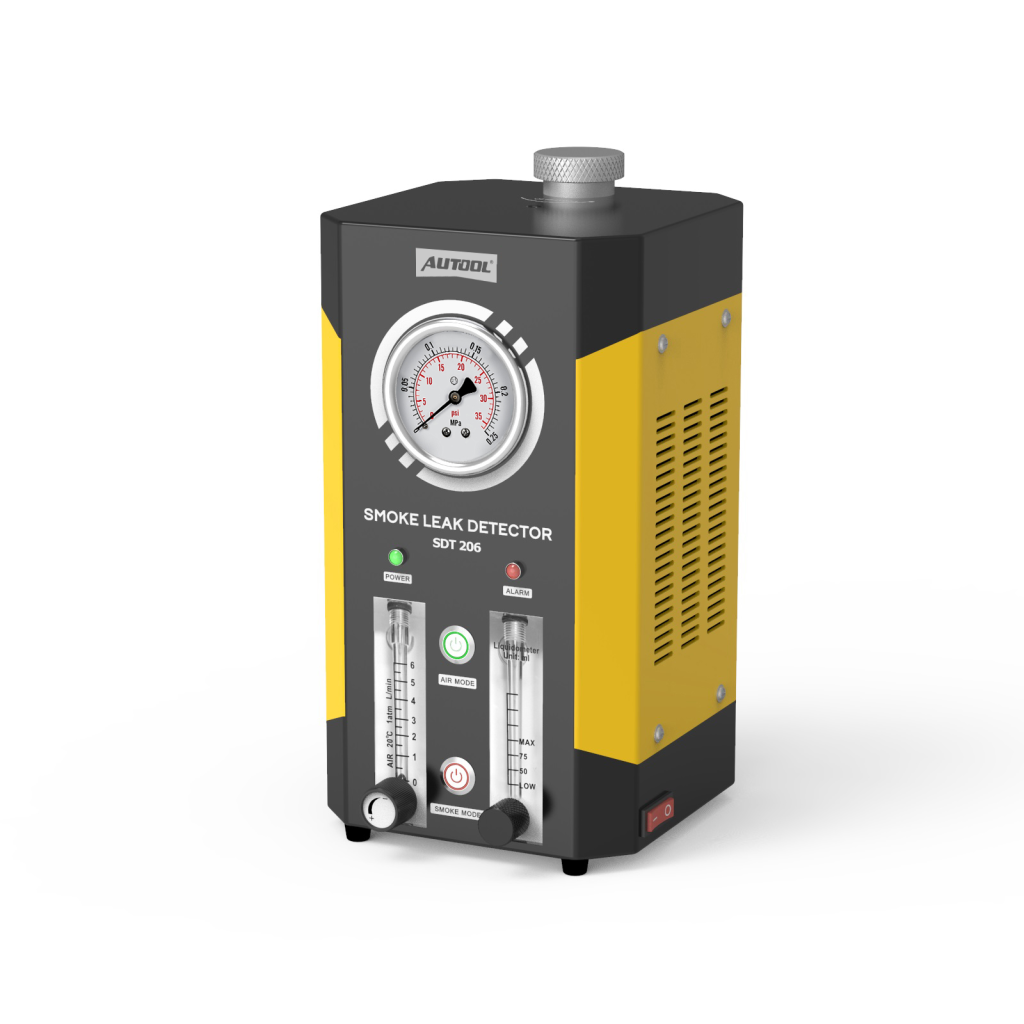
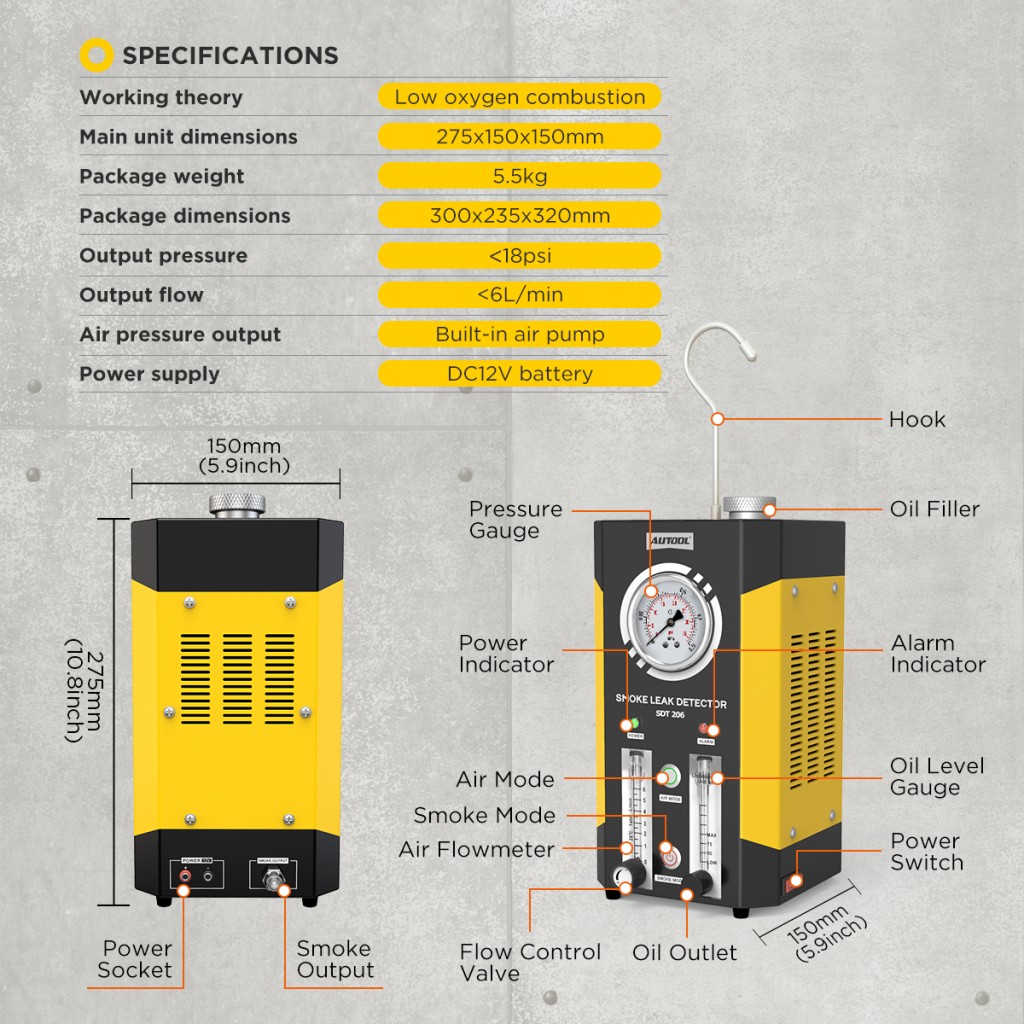
Use separate built-in pumps for Air and Smoke modes without an external air source. Watch line pressure and airflow, adjust delivery for the connected permitted low-pressure test, then use smoke to trace the visible path; the oil-level gauge and drain outlet simplify testing-oil checks and excess-oil removal.
- Separate Air And Smoke Pumps
- Pressure And Flow Feedback
- Adjustable Test Delivery
- Oil-Level Gauge And Drain
- About 5-Second Smoke Start
Key Features
Dual Built-In Pumps with Pressure and Flow Monitoring
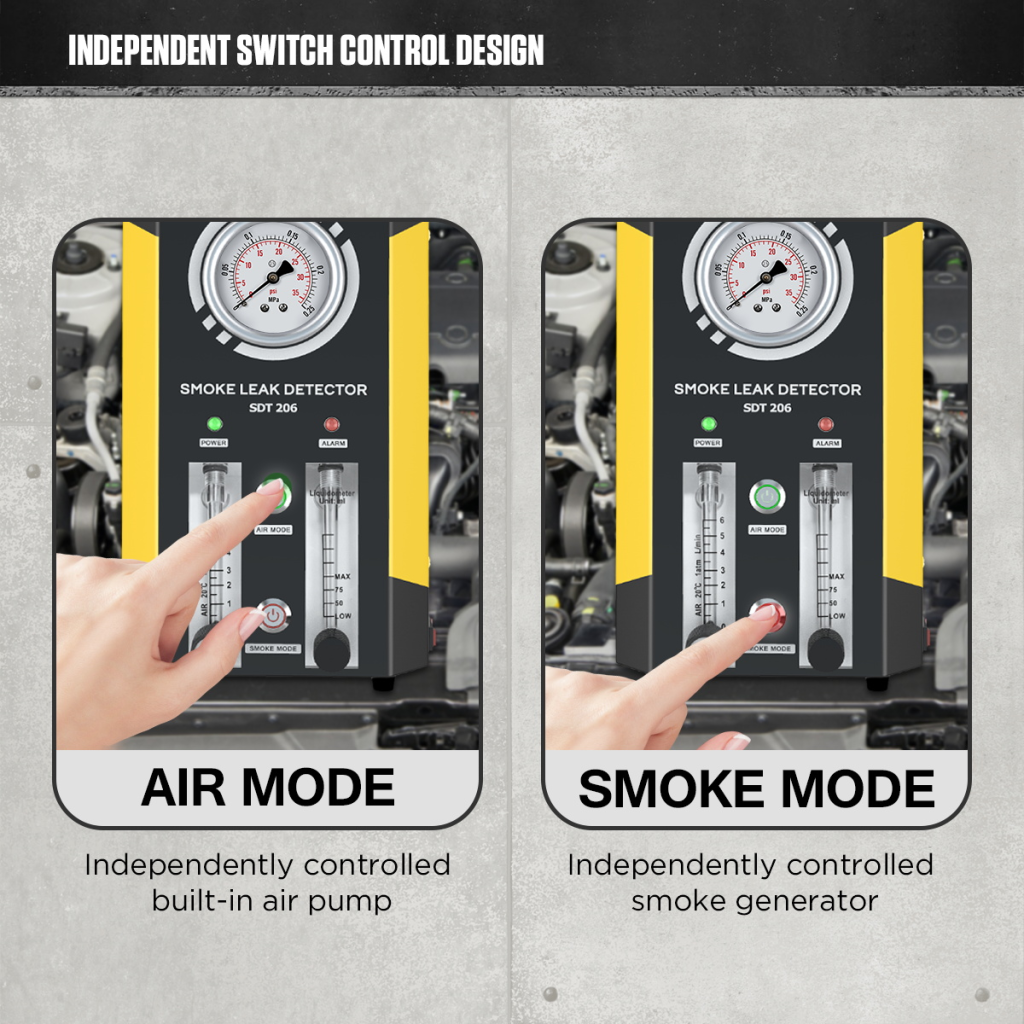
Air Mode and Smoke Mode
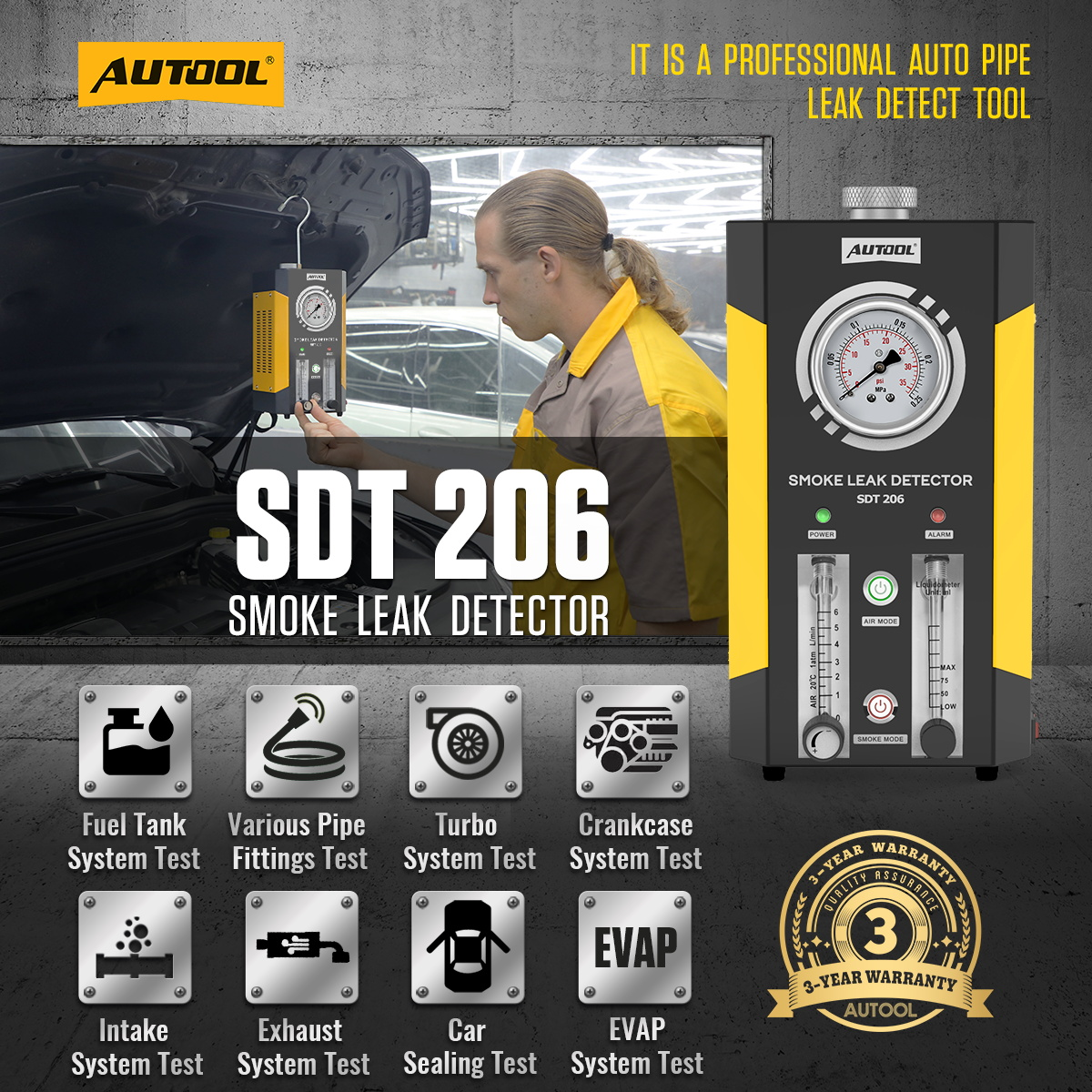
Independent switches let you use Air Mode for pressure and airflow checks, then switch to Smoke Mode for visual leak location.
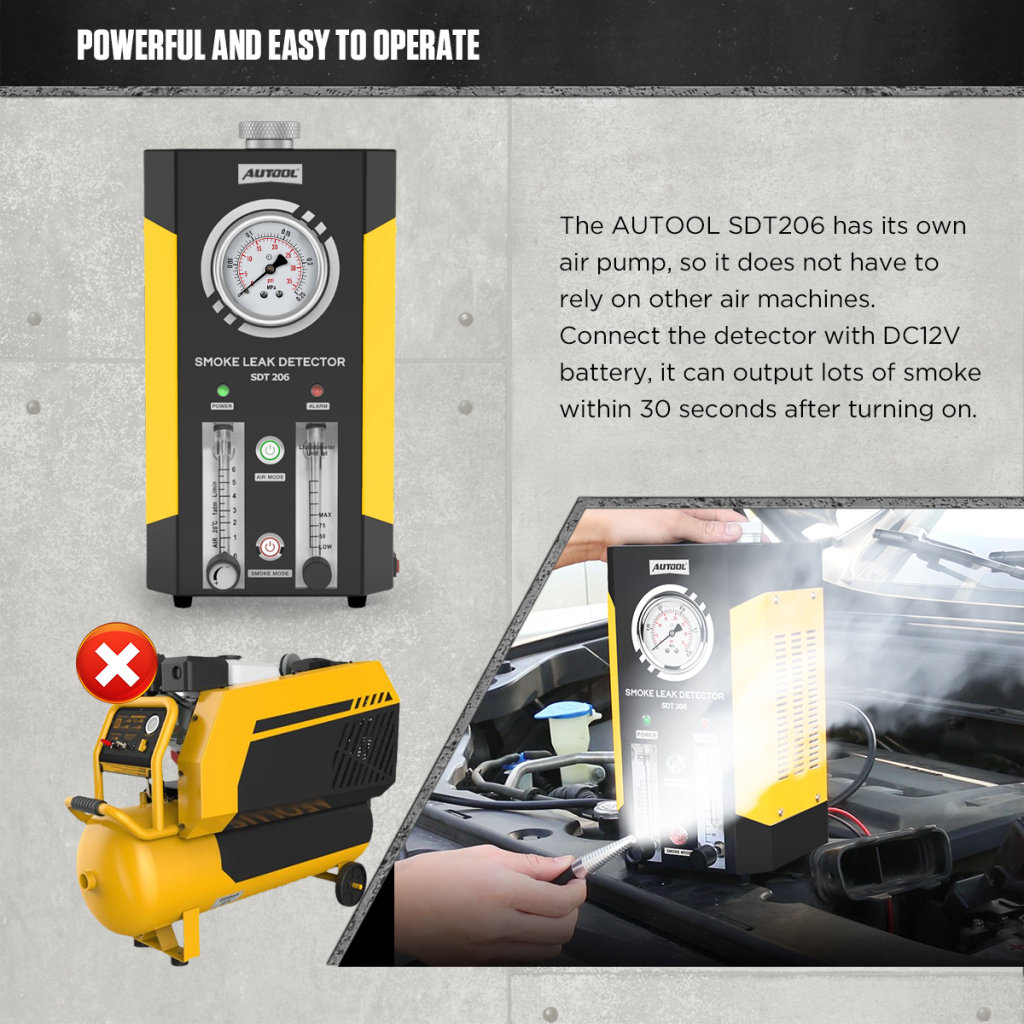
Dual Built-In Air Pumps
Two built-in air pumps eliminate the need for an external air source during normal smoke leak testing.
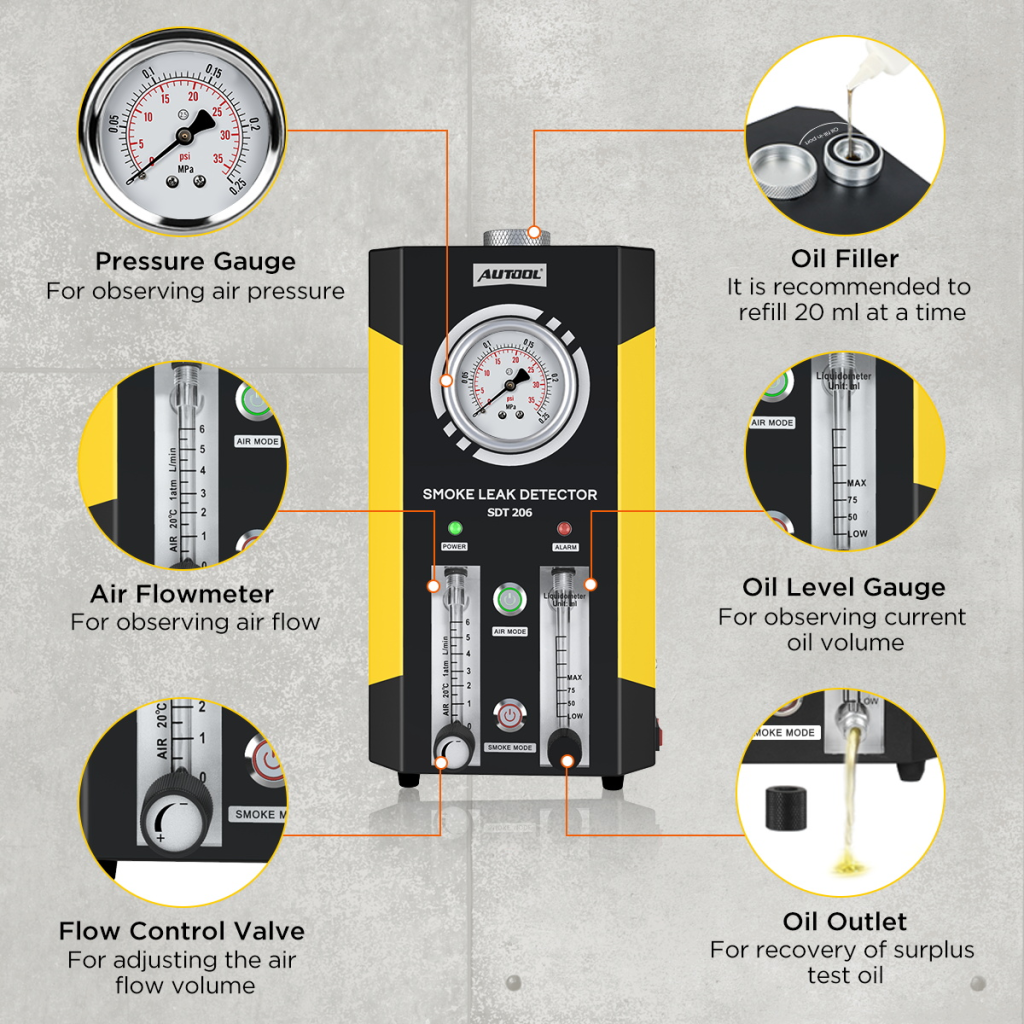
Pressure Gauge Monitoring
Use the pressure gauge to observe line pressure. If pressure keeps dropping, the line may have a leak that requires further inspection.
Airflow Meter
The airflow meter lets you monitor airflow through the connected test line.
Flow Control Valve
Use the flow control valve to adjust airflow for the connected test line and test setup.
Smoke Starts in About 5 Seconds
The unit starts producing smoke quickly. The connected test line can fill in about 30 seconds, depending on system volume.
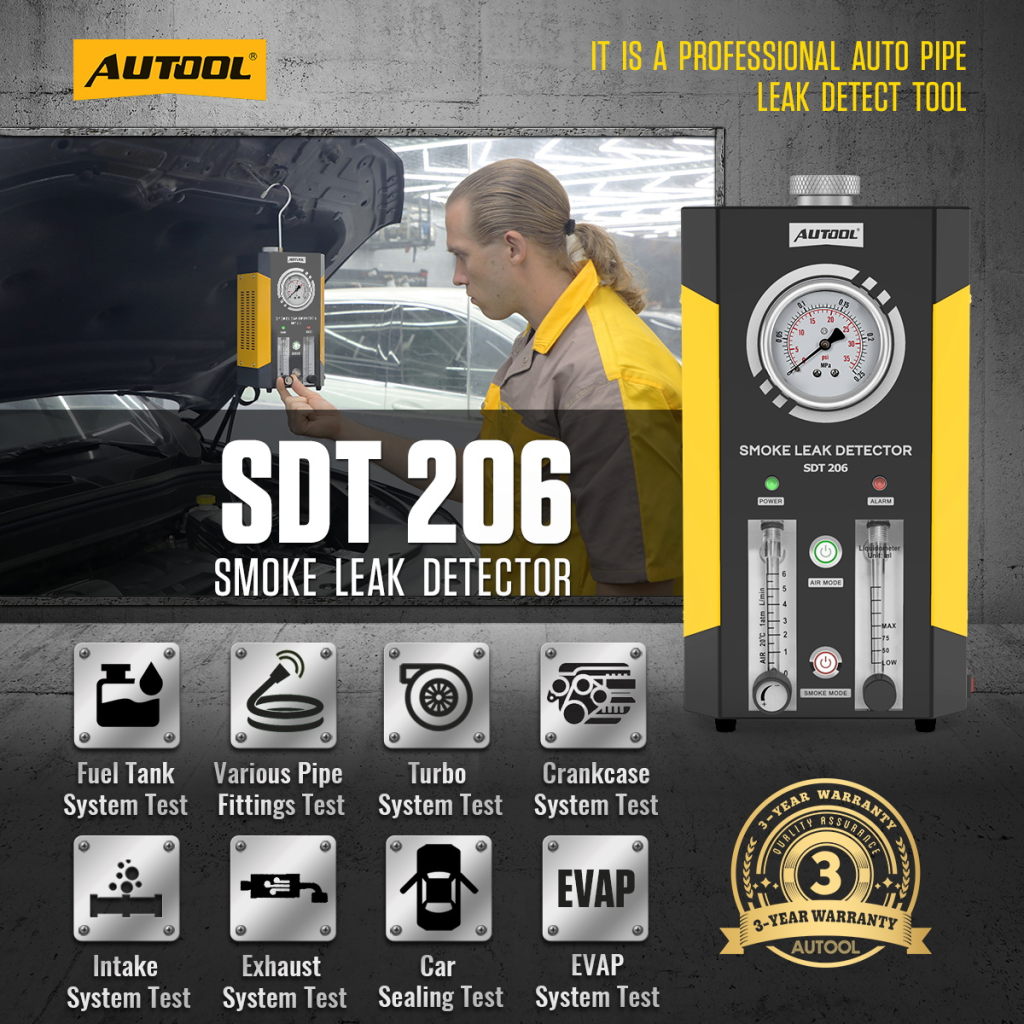
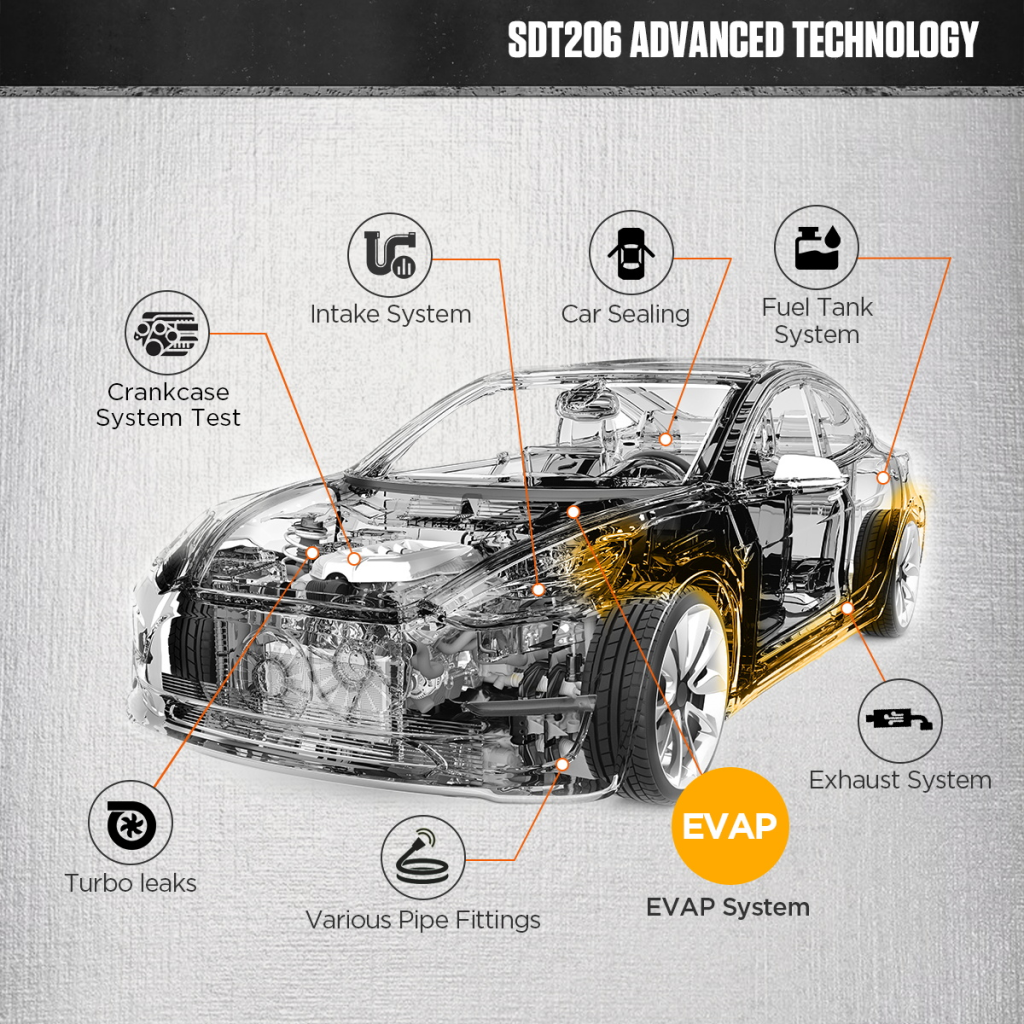
EVAP and Fuel-Tank Checks
Use the EVAP tool or adapter that matches the vehicle test port, then check the EVAP or fuel-tank system for leaks.
Intake and Exhaust Checks
Use it for low-pressure intake and exhaust leak checks when the test section is sealed and connected with an adapter that matches the opening.
Crankcase and Vehicle-Sealing Checks
Helps locate smoke escape points in crankcase and vehicle sealing checks; do not smoke-test any component that the vehicle or component service procedure excludes.
Low-Pressure Turbo Checks
Can assist with low-pressure turbo system leak checks. Do not use it as a high-pressure boost system tester beyond its rated pressure.
Line-Fitting Adapter Support
The smoke hose, adapters, rubber kits, and airbag adapter help connect the unit to different line openings and fittings.
Visible Oil Level Gauge
The oil level gauge helps you observe the current oil volume.
Oil Outlet
The oil outlet lets you drain excess testing oil when needed.
Handle + Hook Portable Design
The compact body, handle, hook, cone adapter, and airbag adapter make SDT206 easier to carry, position, connect, and store.
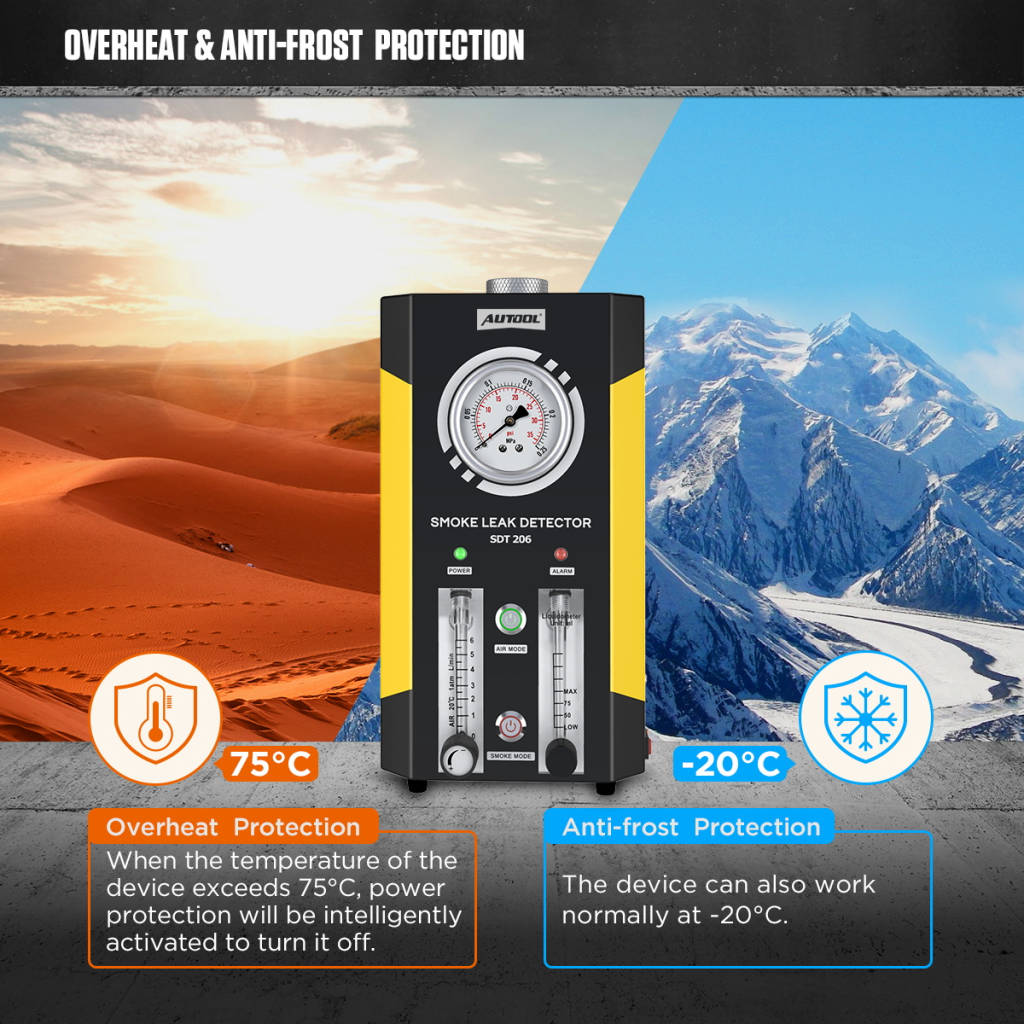
Overheat and Low-Temperature Protection
The unit turns off when the temperature exceeds 75°C and supports operation down to -20°C.
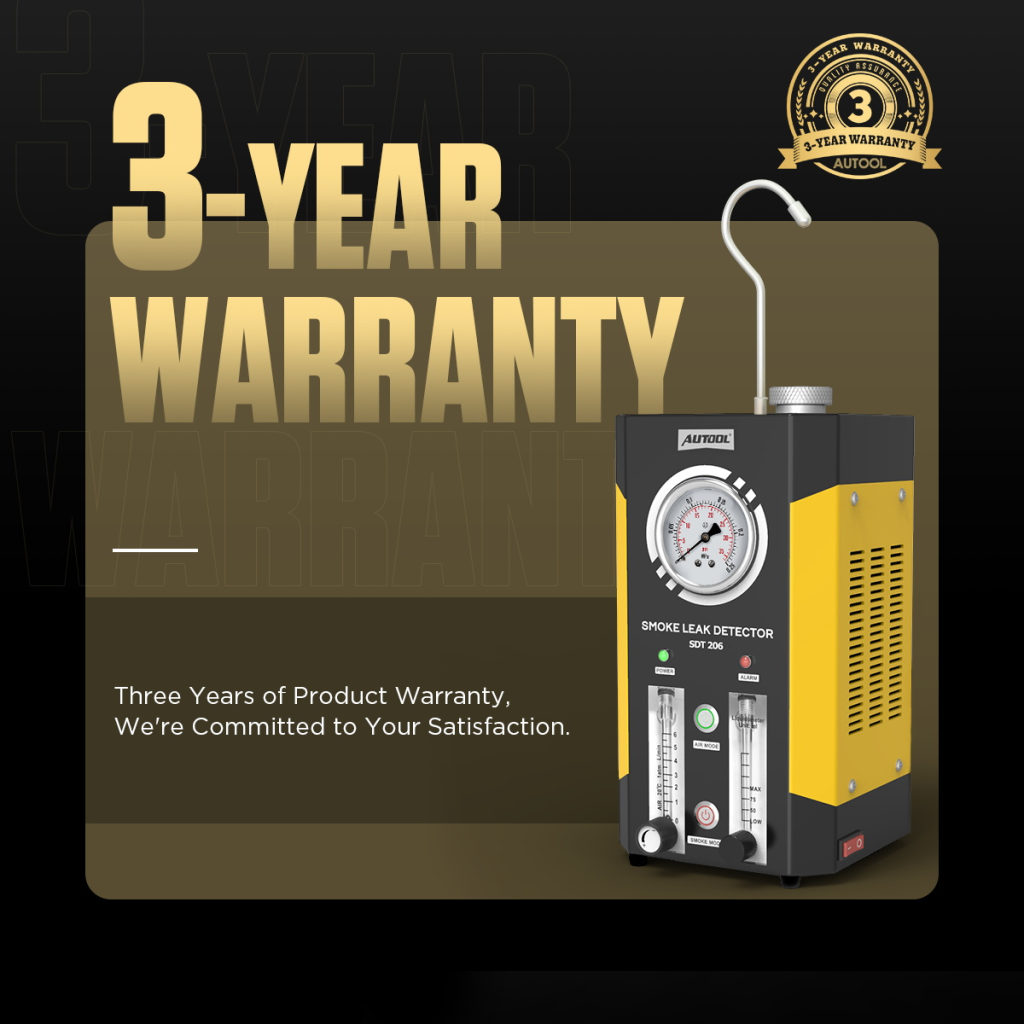
3 Years Warranty Support
Main unit: 3-year warranty. Standard accessories: 1-year warranty. Warranty Policy.
Safety & Compatibility
Match Output to the Exact System and Procedure
12V Power and Dual Built-In Air Pumps
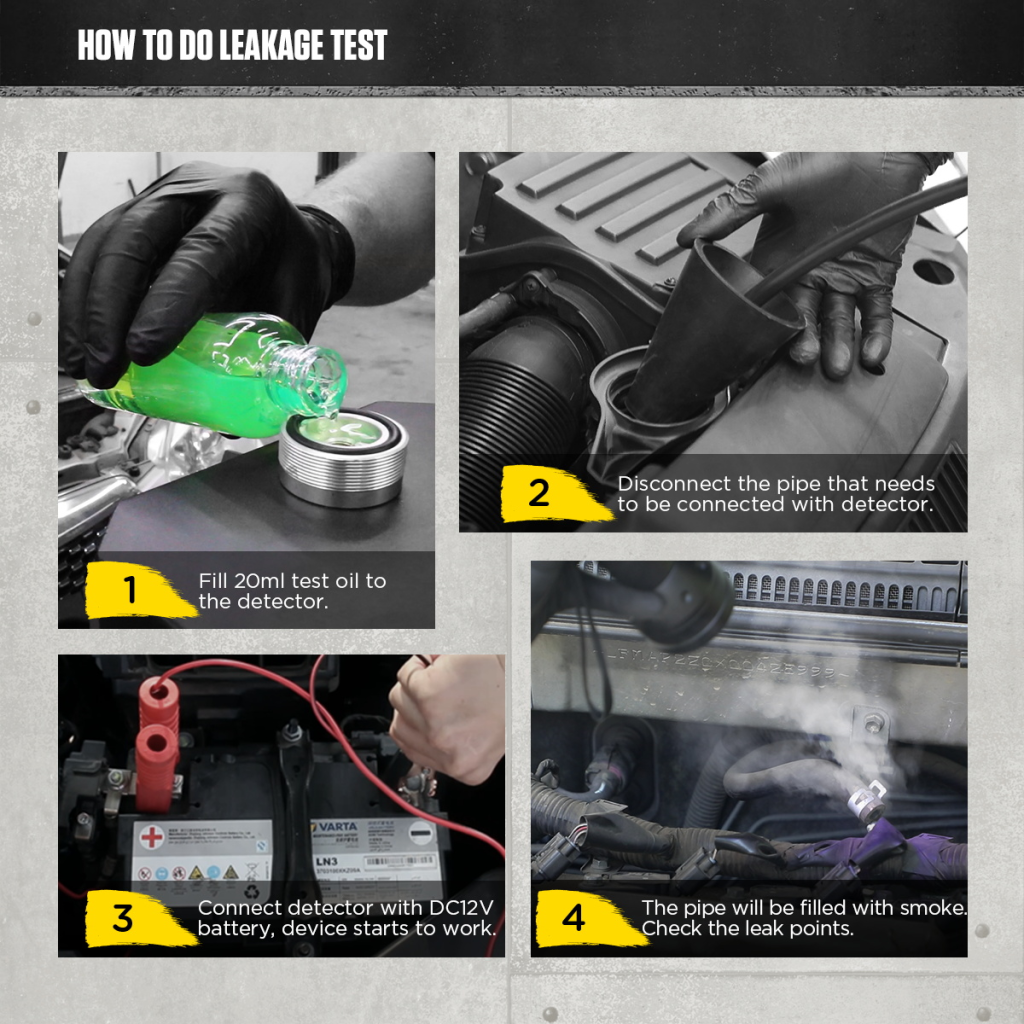
Connect SDT206 to a 12V DC vehicle battery before use. Two built-in air pumps provide the test airflow, so you do not need an external compressor.
Watch Pressure and Airflow Within Service Limits
SDT206 outputs less than 18 psi and less than 6 L/min. Use the pressure gauge, airflow meter, and flow control valve to watch and adjust the test within the vehicle or component service limits.
Use the Oil-Level Gauge, but Keep the 10–15 mL Fill Limit
Testing oil is not included. Use liquid paraffin or baby oil, add 10–15 mL before use, and use the oil-level gauge to check the current oil volume without overfilling.
Limit Continuous Use to 8 Minutes
Do not run SDT206 continuously for more than 8 minutes. Automatic overheat protection shuts off power above 75°C. Let the unit cool before restarting.
Operating Temperature and Hot Surfaces
SDT206 supports operation down to -20°C. The round metal housing can become hot during use, so avoid touching hot surfaces directly.
Use Only for Permitted Low-Pressure Automotive Tests
Use SDT206 for permitted low-pressure automotive leak checks, including low-pressure turbo paths within the stated limits. Do not use it for direct high-pressure A/C pressure testing or high-pressure boost-system testing.
Trace the Leak with Smoke
Use visible smoke to trace the leak area. If no smoke appears, recheck isolation, flow, and the test setup before continuing.
Never Refill While Running
Do not refill testing oil while SDT206 is running.
Check Procedure Before Smoke Testing
Follow the vehicle or component service procedure before introducing smoke into a system.
Keep Controls Within Pressure Range
Use the pressure and airflow controls within the permitted test-pressure range.
Cool Before Restarting
Let the unit cool before restarting after overheat protection is triggered.
Test Results
Read Pressure, Flow, and Smoke Separately
Use Pressure and Flow to Guide Inspection
Use the pressure gauge and airflow meter to assess line pressure and airflow, then guide the next leak-inspection step.
Visible Smoke Escape
Check that the outlet is not an intentional opening, then inspect, repair and retest the exact area.
No Visible Smoke
Verify access, isolation, valve state and smoke delivery before moving to functional diagnosis or another test method.
Specifications
SDT206 Specifications
| Smoke Output & Protection | |
|---|---|
| Working Principle | Low Oxygen Combustion |
| Test Oil Filling Volume | 10-15ml |
| Rated Output Pressure | <18 psi machine-rated output; use the target-system procedure. |
| Rated Output Flow | <6L/min |
| High-Temperature Protection | Stops working above 75°C |
| Response Time | Produces smoke in 5 seconds |
| Power & Physical Size | |
| Input Power | DC12V |
| Rated Power | 70W |
| Net Weight (Main Unit) | 3.5kg |
| Main Unit Dimensions | 150mm*150mm*275mm |
| Monitoring & Controls | |
| Flow Meter Window | Yes |
| Pressure Gauge | Yes |
| Air Source Type | Built-in 2 Air Pump |
| Mode Output | Air ModeSmoke Mode |
| Flow Adjustment Knob | Yes |
| Oil Drain Valve | Yes |
| Fault Indicator Light | Yes |
| Oil Level Gauge | Yes |
Manual & Downloads
Use the Manual for Setup and Test Pressure
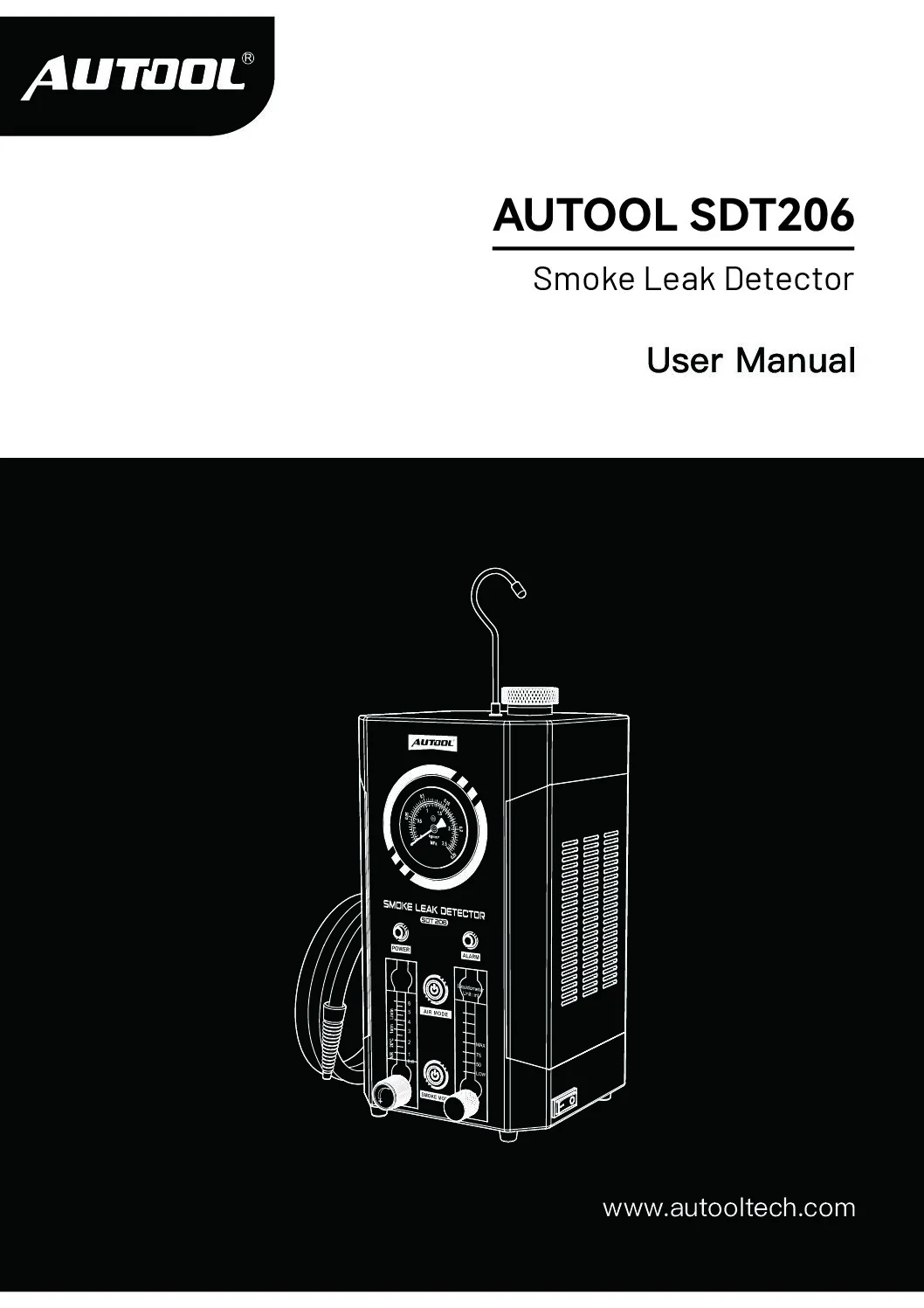
AUTOOL SDT206 User Manual
Open the PDF manual for SDT206 dual-pump Air and Smoke modes, pressure and flow control, oil-level care, operating safety, and troubleshooting.
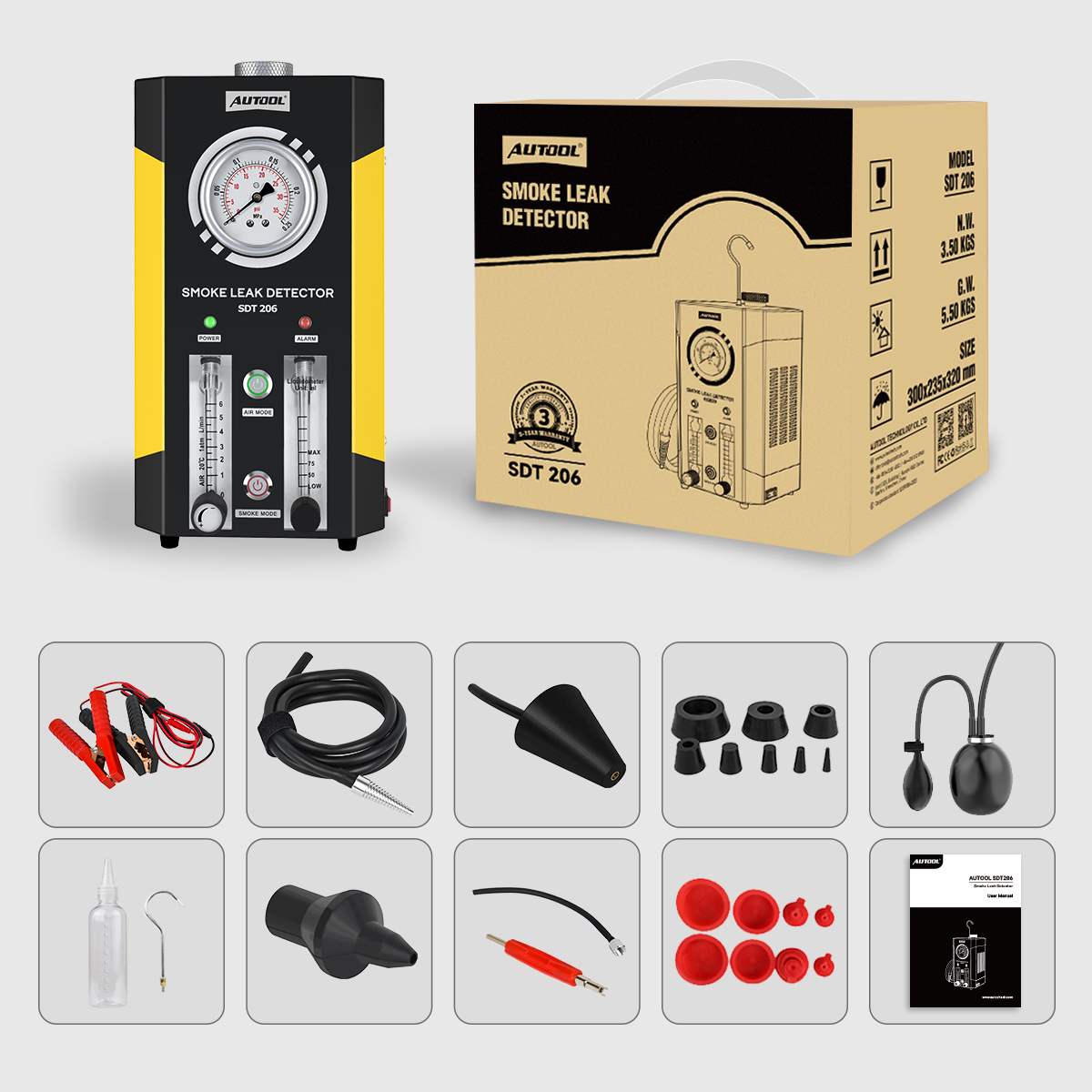
Package
What’s Included
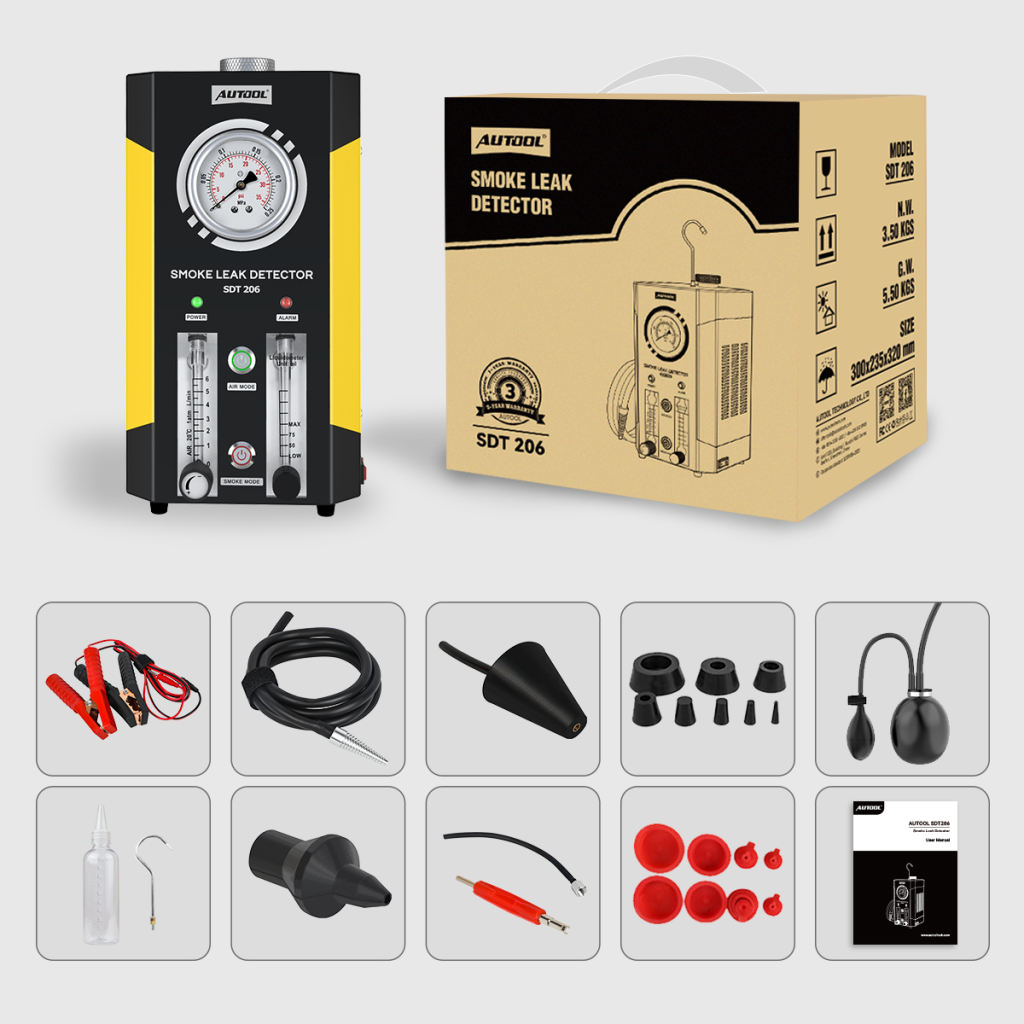
- Main UnitAUTOOL SDT206 smoke leak detector
- Power Cable12V battery clamp power cable
- Smoke HoseSmoke output hose
- AdaptersCone adapter, airbag adapter, and rubber adapter set
- EVAP AccessoriesEVAP-related connectors, caps, and thin hose
- Oil BottleEmpty testing oil bottle included; testing oil is not included
- HookHanging hook
- DocumentationUser manual and SDT206 retail box
FAQs
Pump, Flow, and System Questions
What Testing Oil Should I Use for SDT206?
Testing oil is not included. Use dedicated smoke-testing oil if available; otherwise use liquid paraffin or baby oil as specified for this model.
How Much Testing Oil Should I Add?
Add 10–15 mL testing oil before use. Do not add more than 15 mL at a time. Refill only when the smoke becomes thin, and drain remaining testing oil before adding fresh testing oil. If too much oil is added accidentally, drain some oil out before operation.
Can SDT206 Detect EVAP Leaks?
Yes. This EVAP smoke machine supports permitted low-pressure leak checks in the EVAP system. Use the EVAP adapter or service tool that matches the vehicle test port.
Can SDT206 Directly Test Automotive A/C System Leaks?
No. The automotive A/C system operates at about 1.7–3.0 MPa output pressure, while AUTOOL smoke leak detectors generate much lower pressure. SDT206 cannot directly pressure-test the automotive A/C system for leaks. Use smoke only to help inspect an A/C line section after isolating and pressurizing it according to the service procedure.
How Can Smoke Help Locate a Leak in an Isolated A/C Line Section?
First isolate and pressurize the A/C line segment according to the vehicle or A/C service procedure. Then apply smoke near the test section and observe whether escaping airflow disturbs the smoke. If escaping air moves the smoke, inspect that area for a possible leak. This method can help locate a leak in an isolated A/C line section, but it is not a direct high-pressure A/C test.
What Systems Can SDT206 Test?
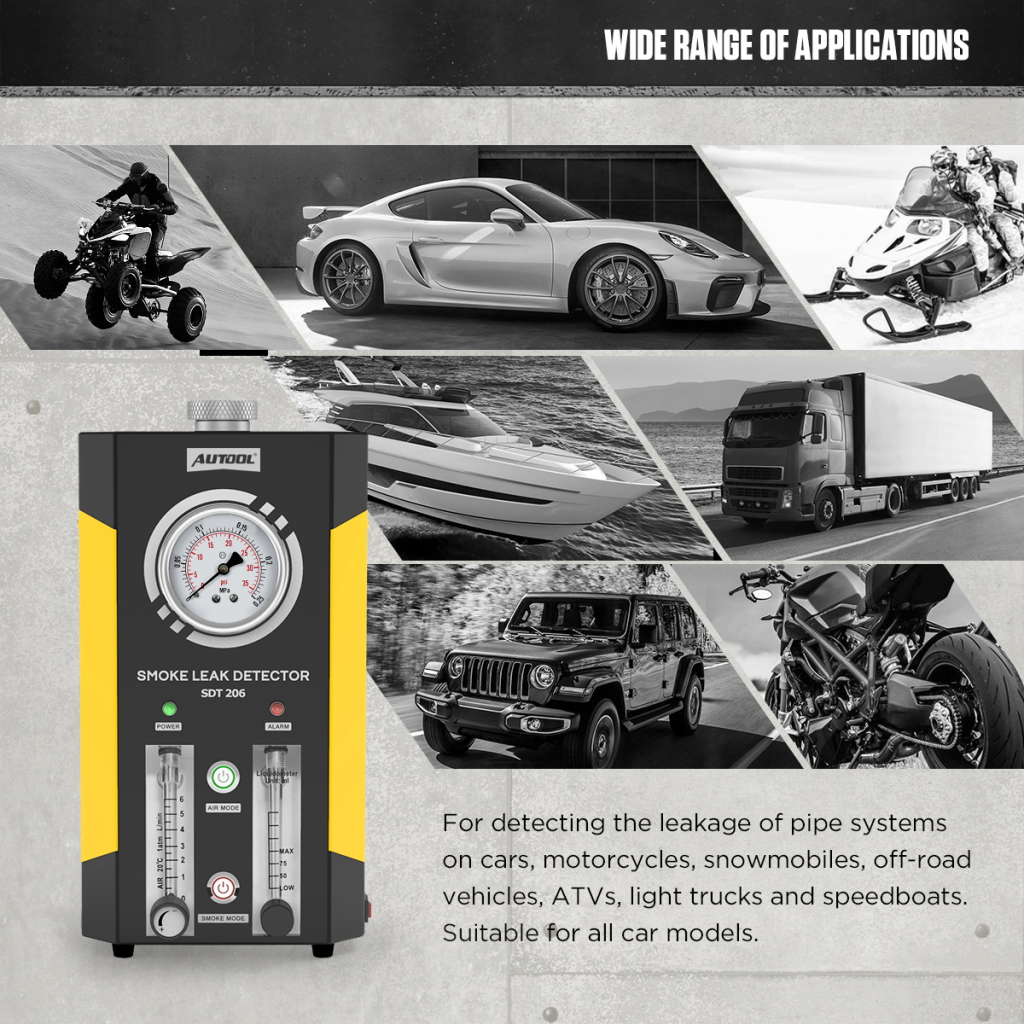
SDT206 supports low-pressure leak checks for EVAP, intake, exhaust, crankcase, fuel-tank, vehicle-sealing, turbo, and line-fitting systems. Use an adapter that matches the test opening, and seal the test section before inspection.
What Power Supply Does SDT206 Need?
SDT206 runs on a 12V DC vehicle battery. Connect it to a 12V vehicle battery before operation.
Can I Adjust the Pressure on SDT206?
SDT206 uses fixed output below 18 psi. Its airflow meter and flow control valve monitor and adjust airflow; they do not change the pressure mode. If separate Standard and EVAP pressure modes are required, compare SDT208.
What Accessories Are Included with SDT206?
Check the product listing or your selected package option for the exact items included. The package includes the main unit, retail box, 12V power cable, smoke hose, cone adapter, hard rubber kits, airbag adapter, empty oil bottle, and hanging hook. EVAP-related accessories, red caps, the user manual, and other listed accessories are also included. Testing oil is not included.
How Do AUTOOL Smoke Leak Detector Models Differ?
- SDT206: Two built-in pumps, separate Air/Smoke modes, pressure gauge, flow meter/control, oil drain, fault light, and oil-level gauge.
- SDT208 alternative: 35 psi Standard / 10 psi EVAP.
The series also includes external-air EVAP, built-in-pump Smoke, Air/Smoke, and dual-pressure options; compare air source, pressure, flow, modes, and accessories.
How Long Is the Warranty for SDT206?
Main unit: 3-year warranty. Standard accessories: 1-year warranty. Warranty Policy.